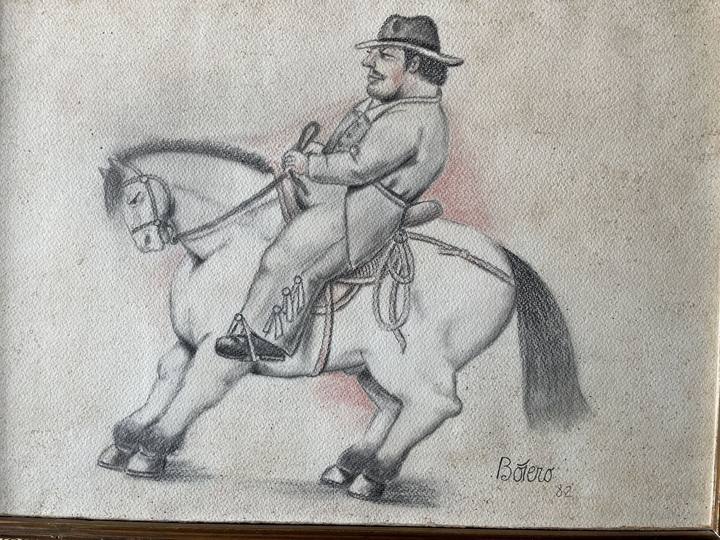
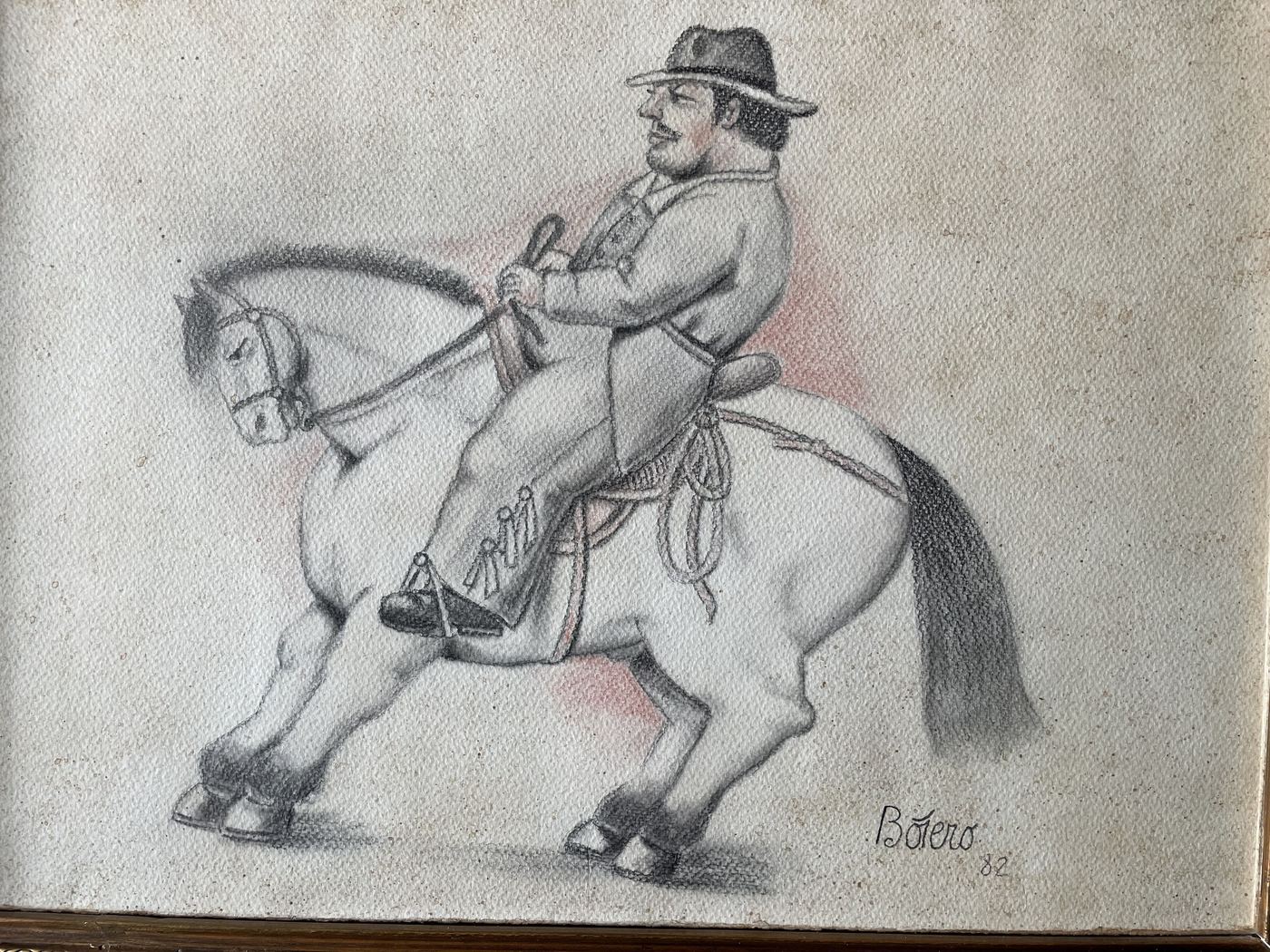
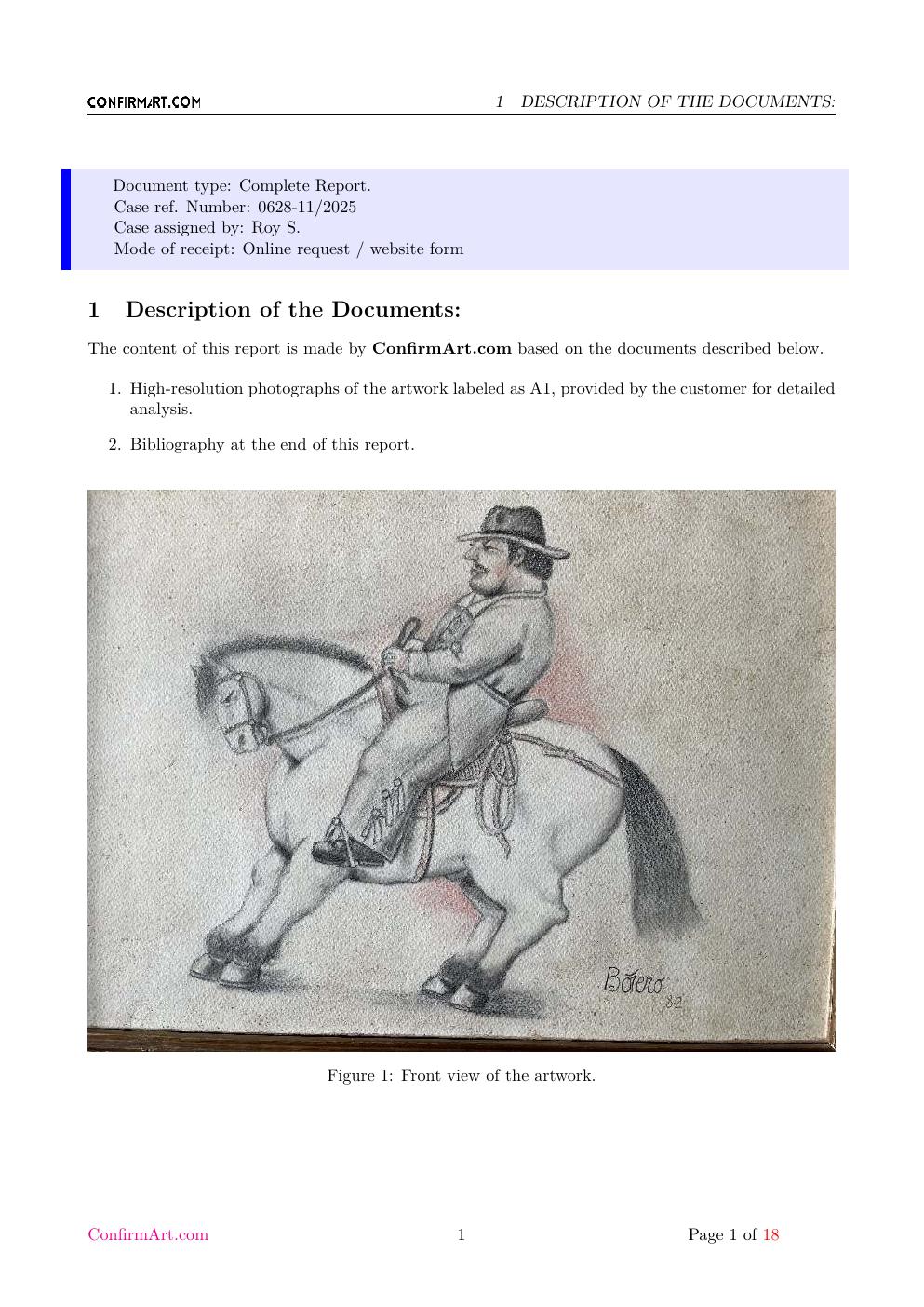
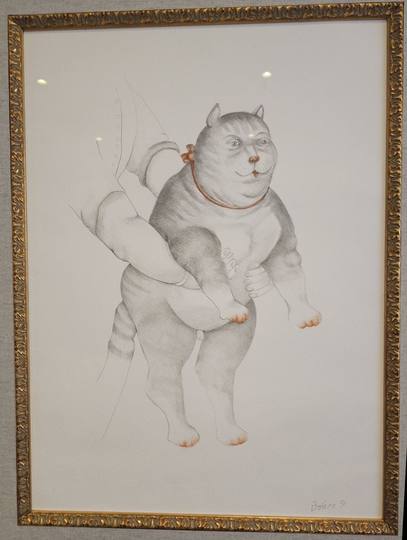
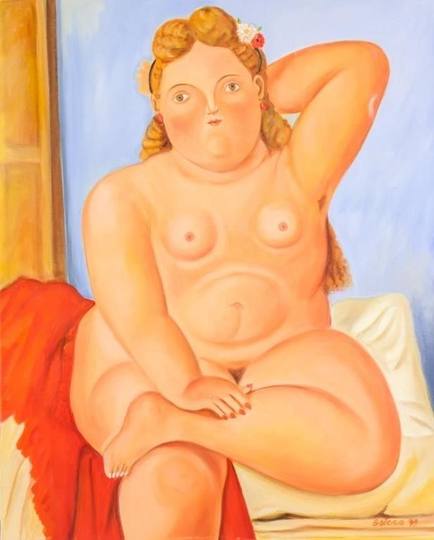
Real client case reviewed by ConfirmArt for Botero Dibujos, attributed or related to Fernando Botero. The public page presents selected visual evidence and a rendered report viewer without exposing the private commissioned PDF.
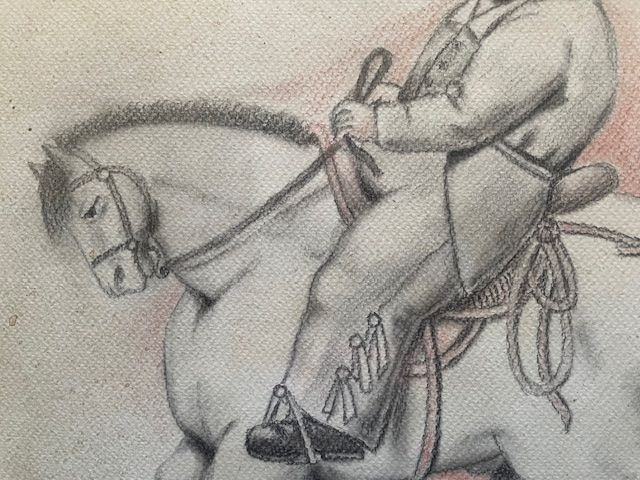
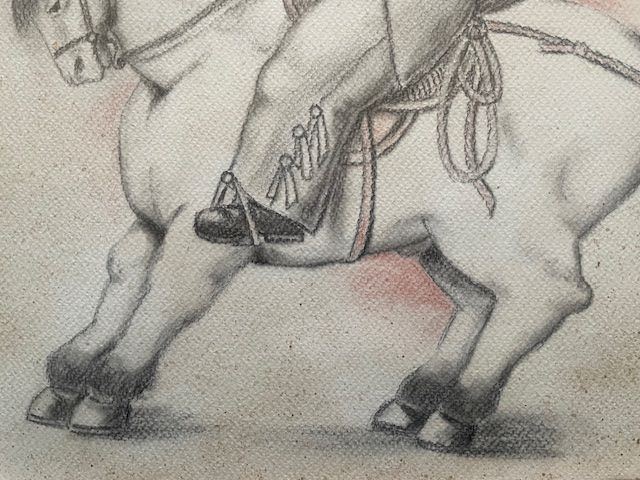
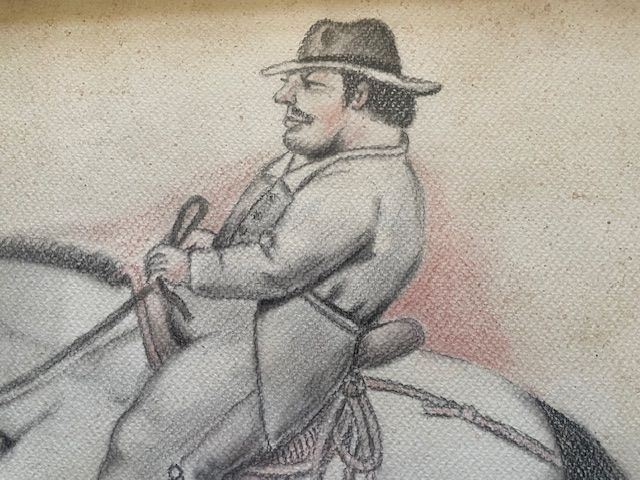
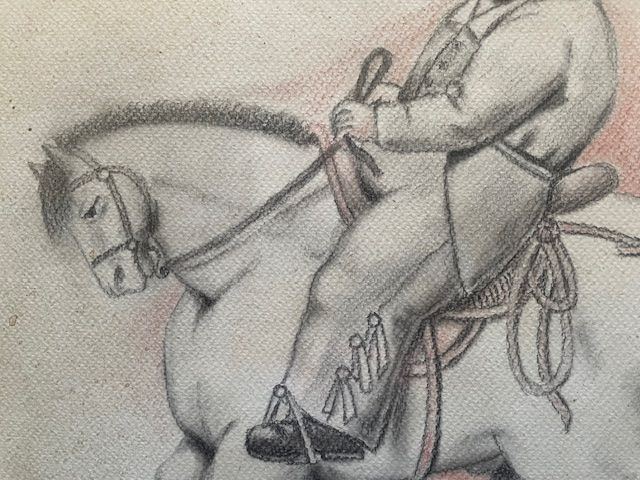
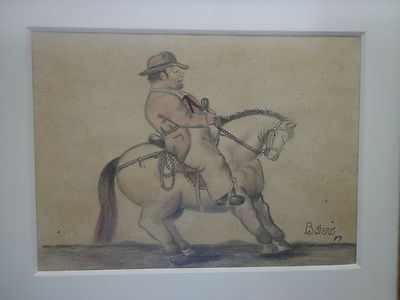
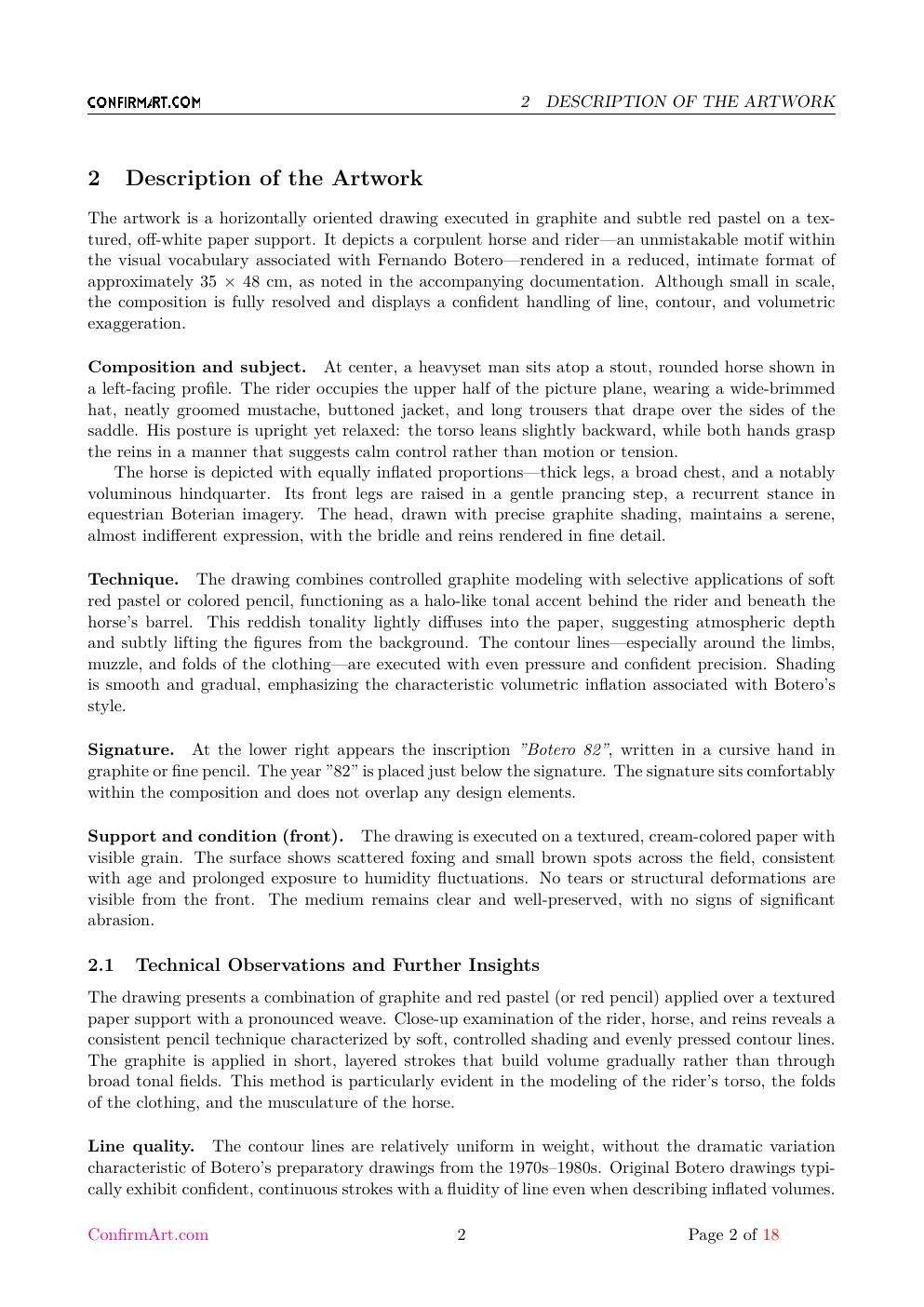
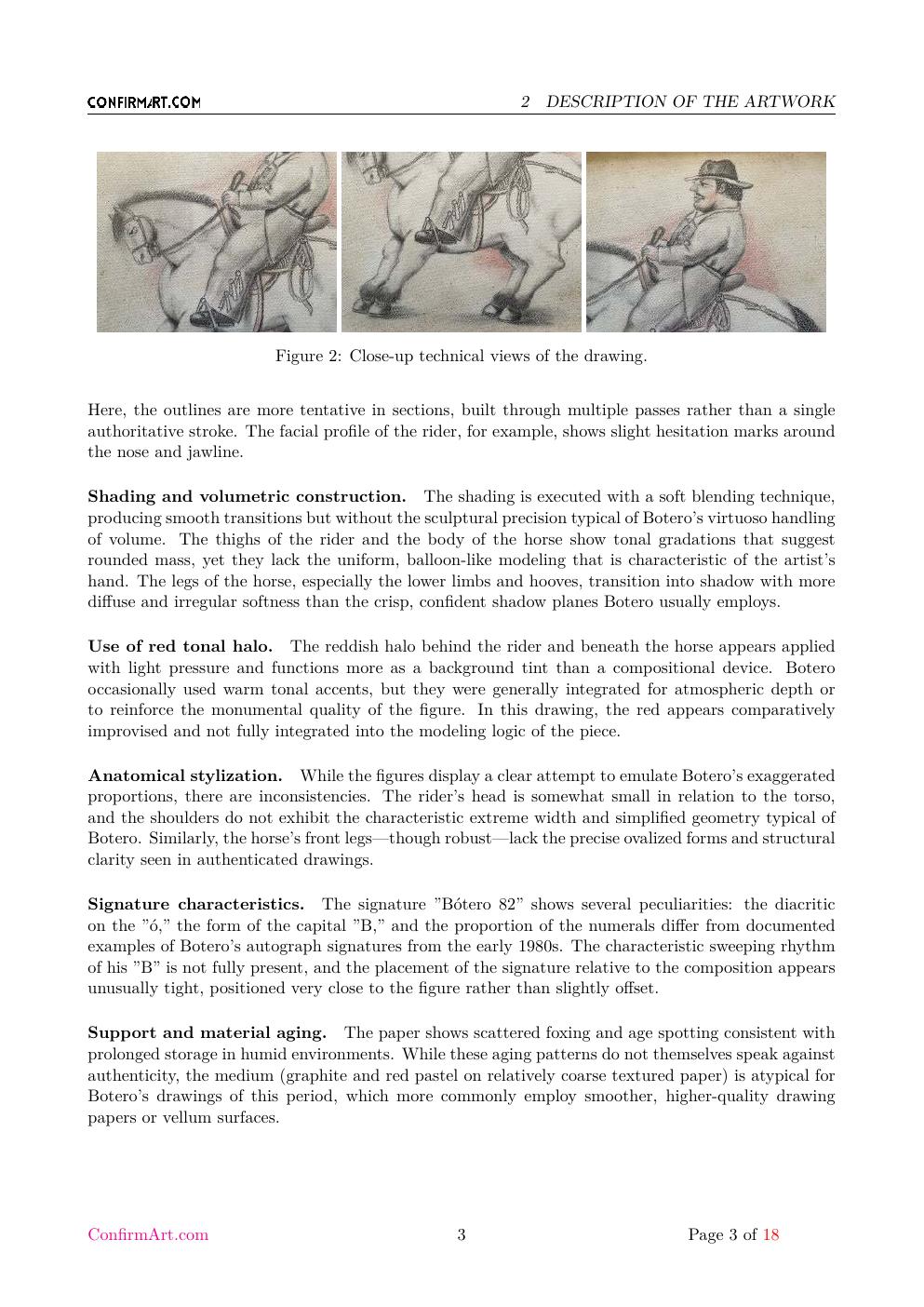
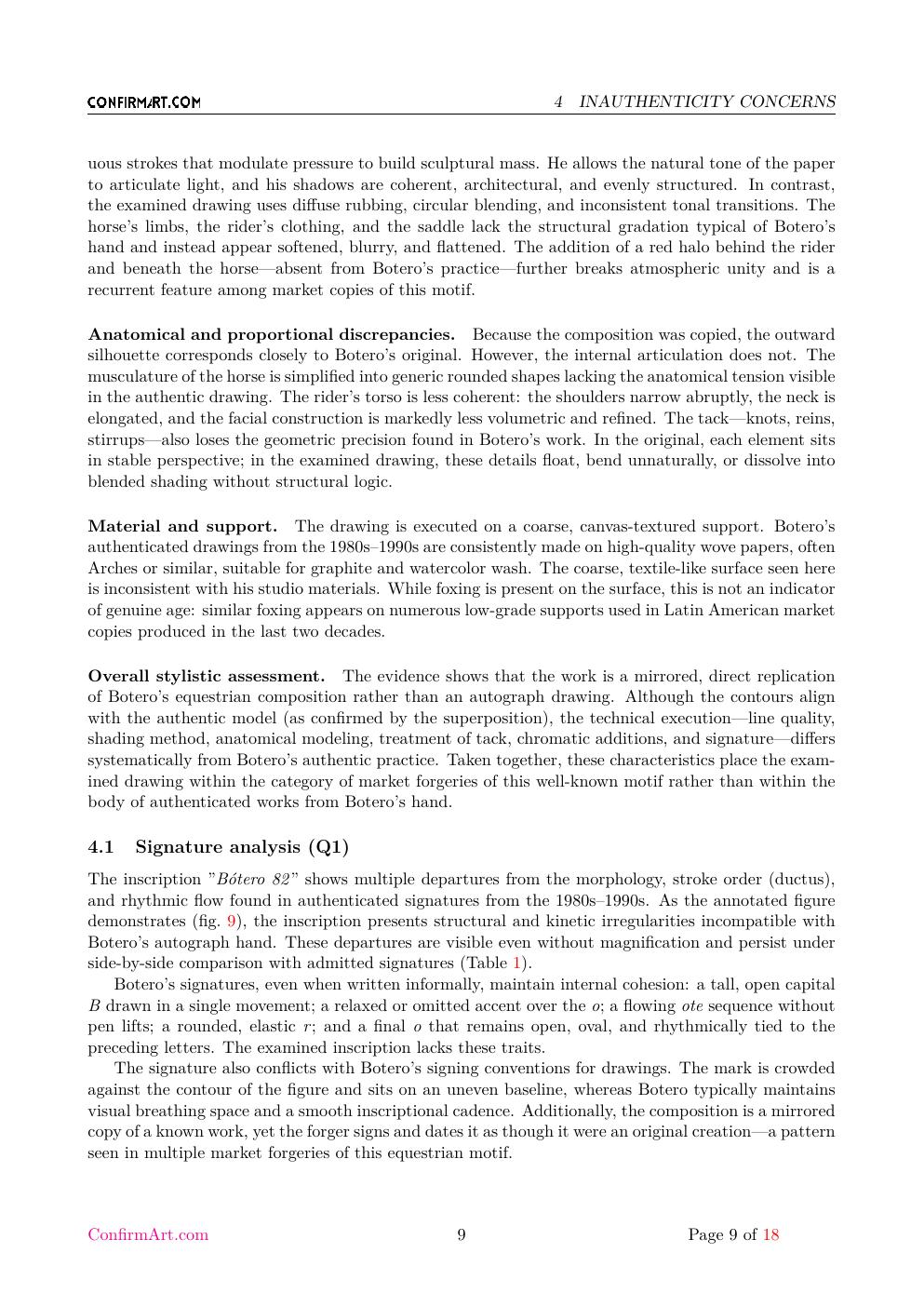
The drawing presents a combination of graphite and red pastel (or red pencil) applied over a textured paper support with a pronounced weave. Close-up examination of the rider, horse, and reins reveals a consistent pencil technique characterized by soft, controlled shading and evenly pressed contour lines. The graphite is applied in short, layered strokes that build volume gradually rather than through broad tonal fields.
02
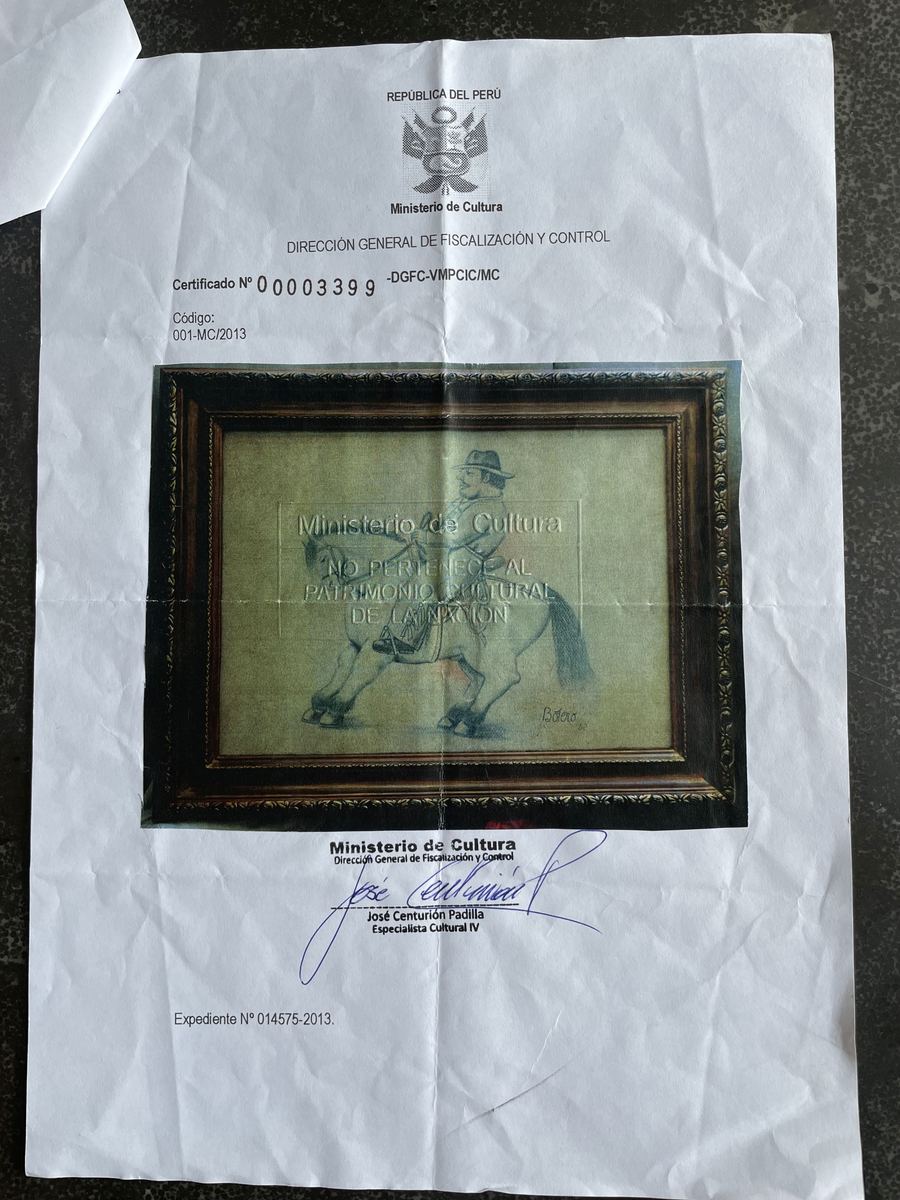
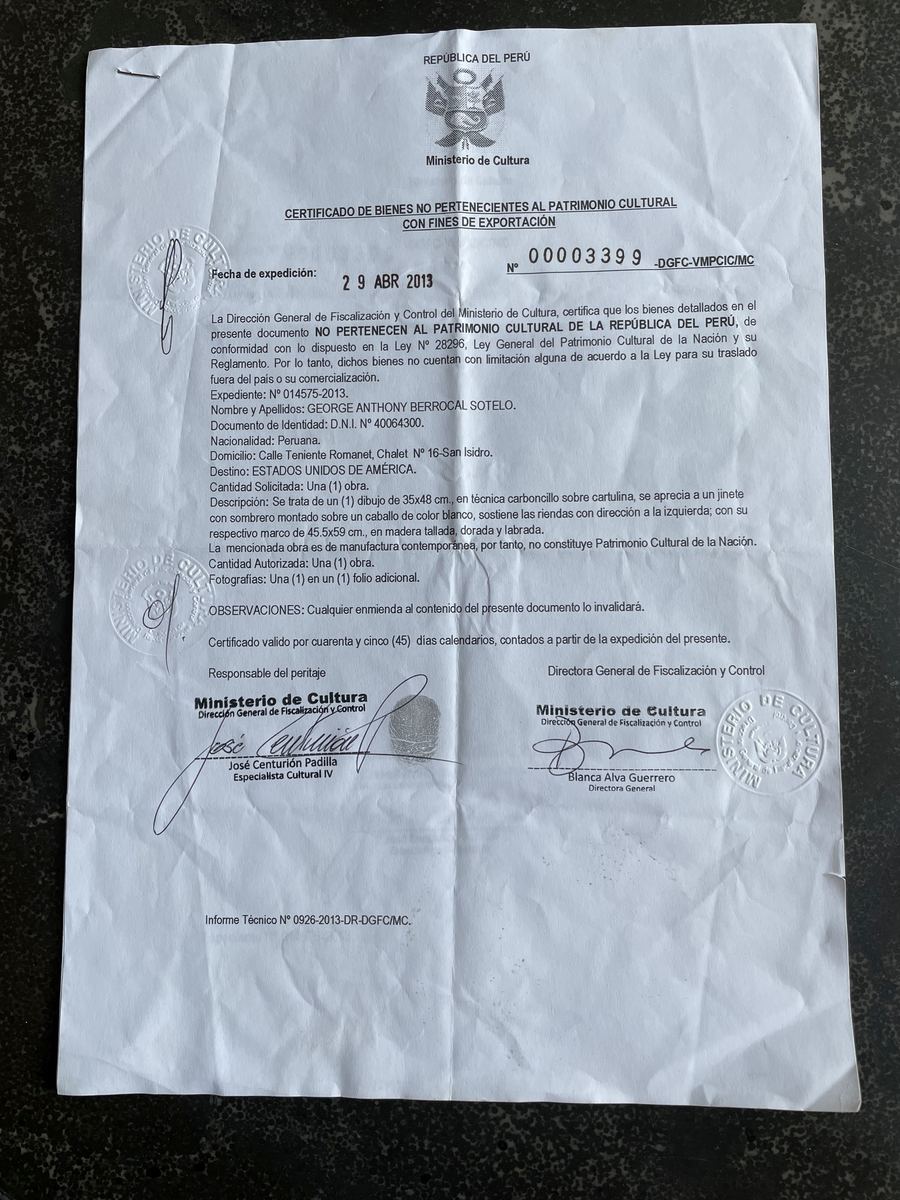
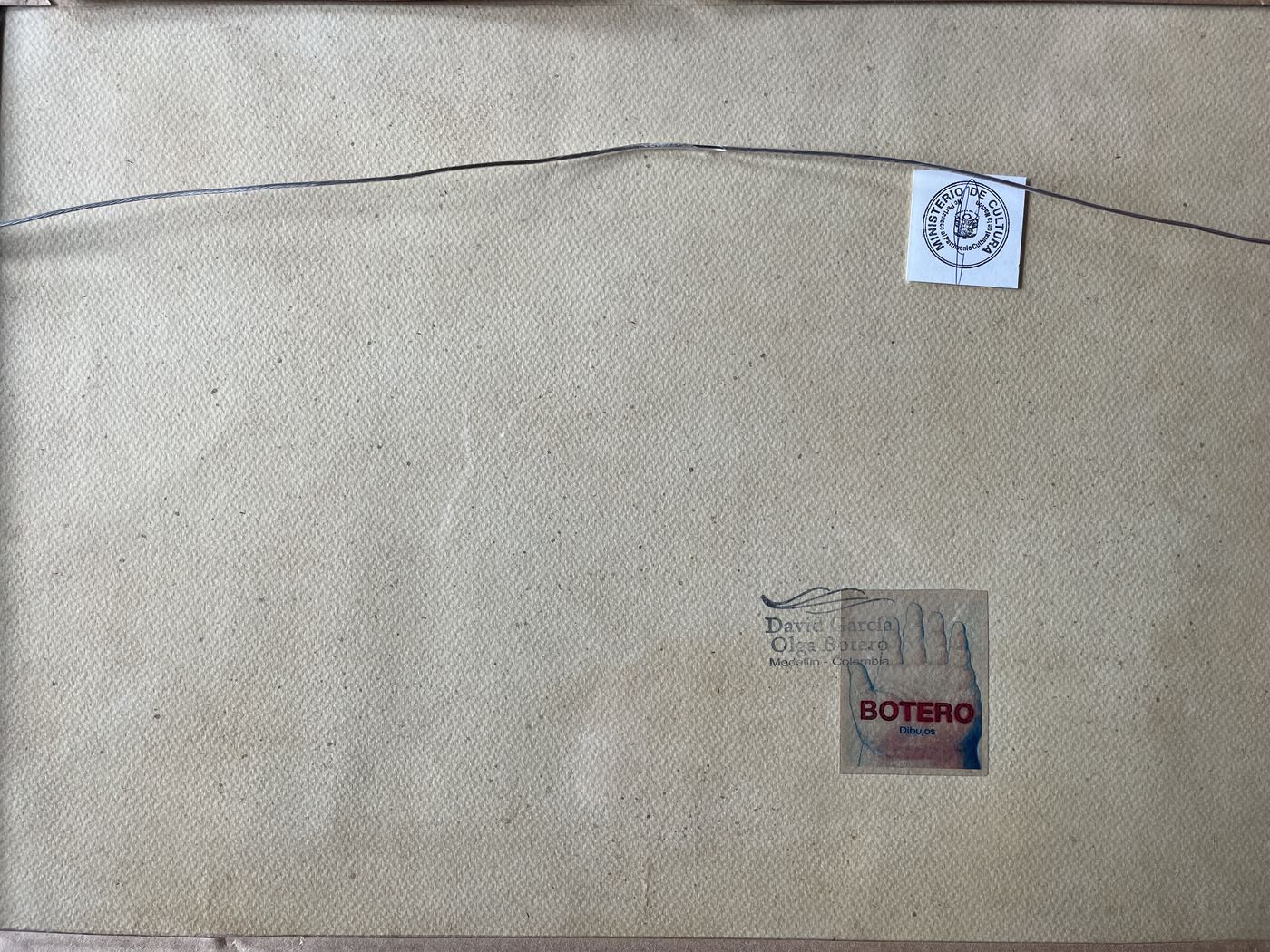
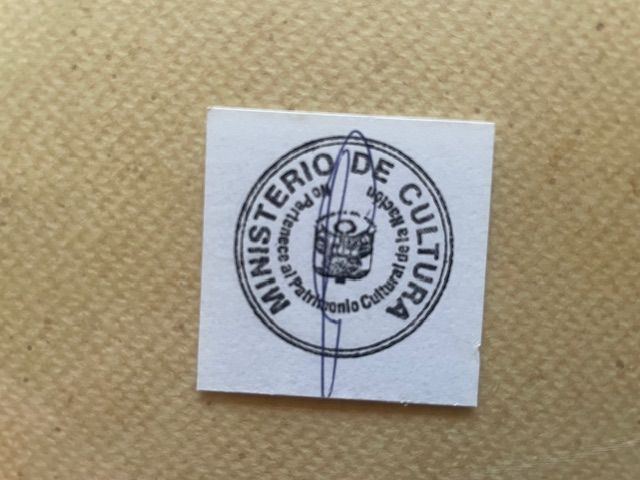
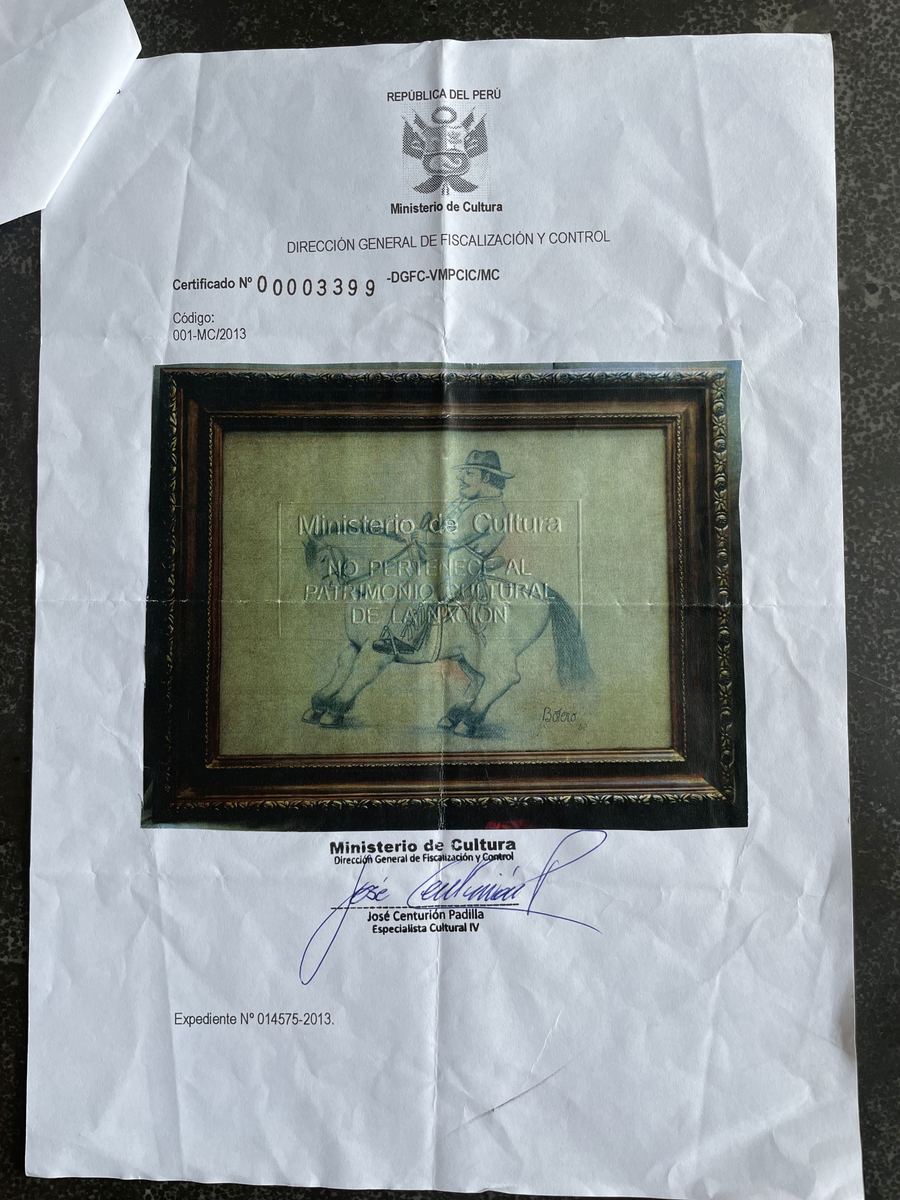
Provenance, Documentation, Stamps, and Labels
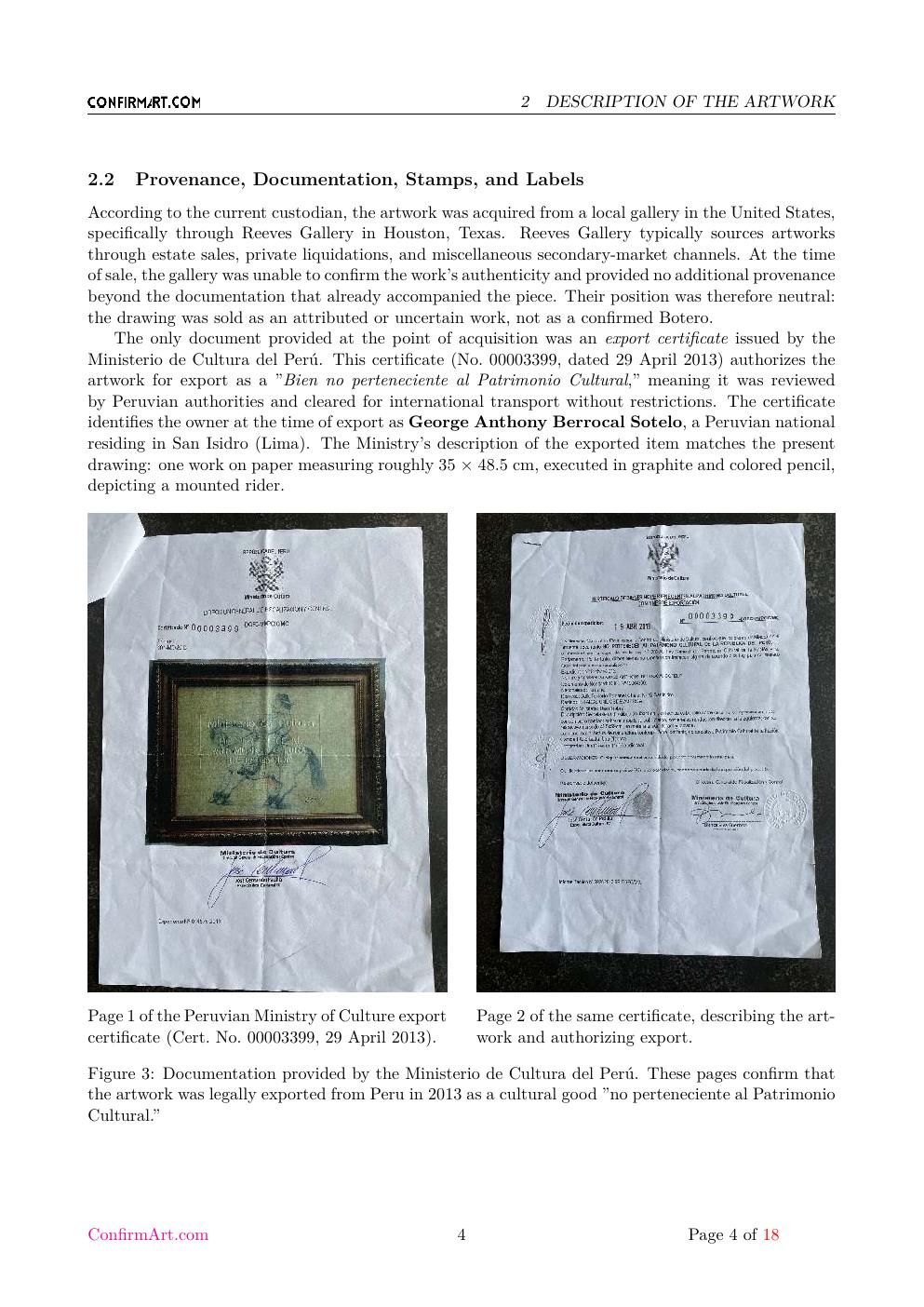
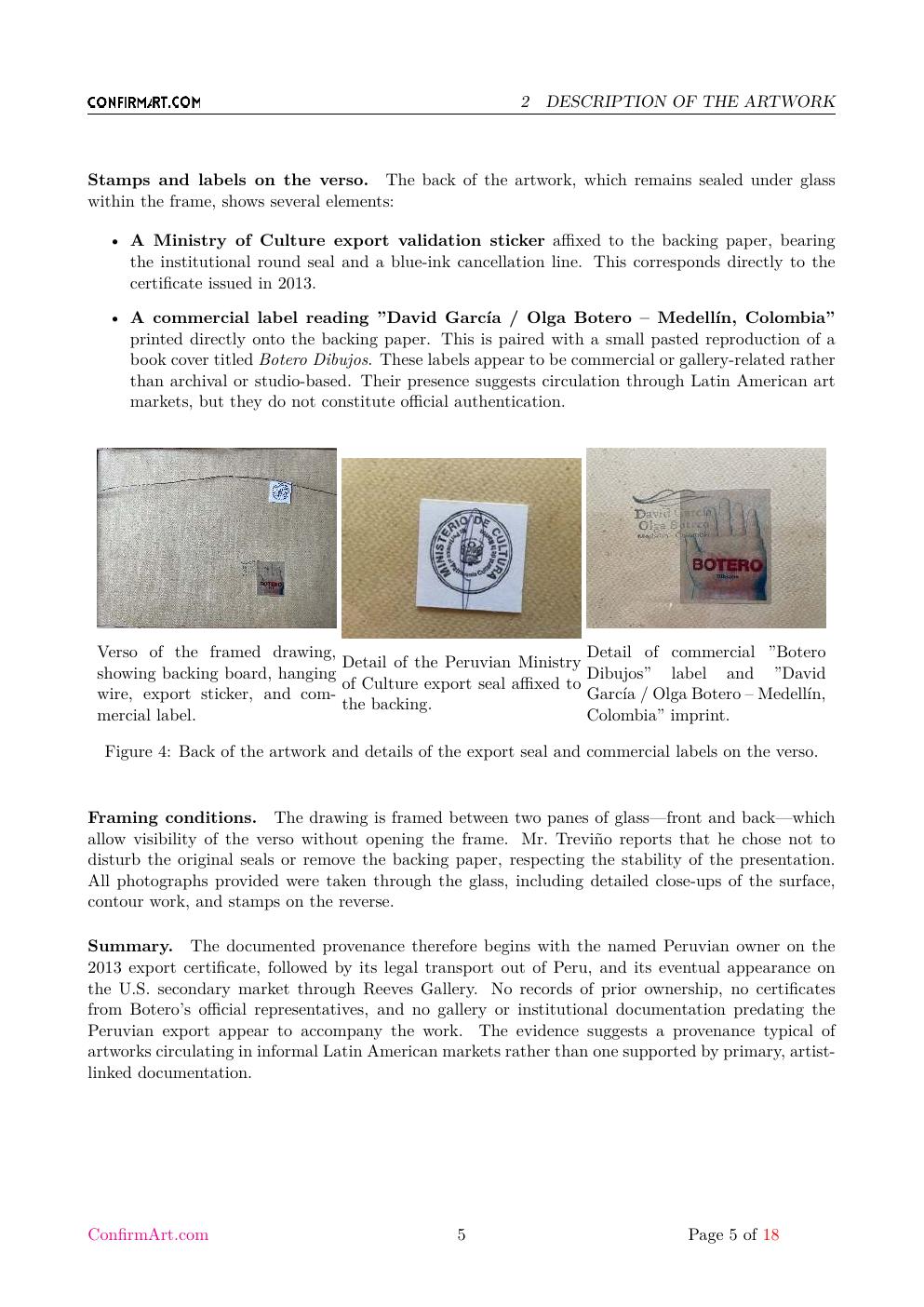
According to the current custodian, the artwork was acquired from a local gallery in the United States, specifically through Reeves Gallery in Houston, Texas. Reeves Gallery typically sources artworks through estate sales, private liquidations, and miscellaneous secondary-market channels. At the time of sale, the gallery was unable to confirm the work's authenticity and provided no additional provenance beyond the documentation that already accompanied the piece.
03
Catalogue Note
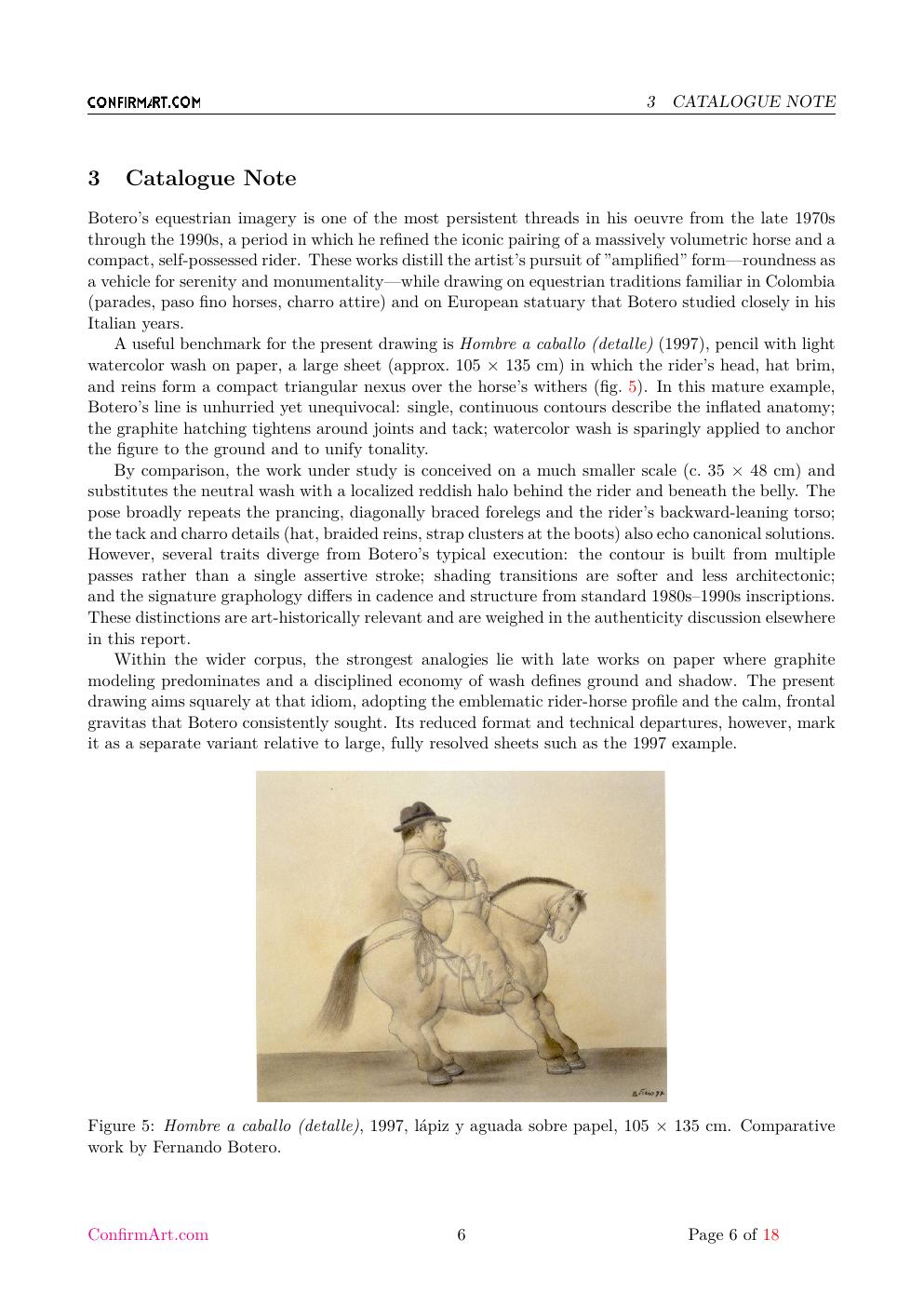
Botero's equestrian imagery is one of the most persistent threads in his oeuvre from the late 1970s through the 1990s, a period in which he refined the iconic pairing of a massively volumetric horse and a compact, self-possessed rider. These works distill the artist's pursuit of "amplified" form—roundness as a vehicle for serenity and monumentality—while drawing on equestrian traditions familiar in Colombia (parades, paso fino horses, charro attire) and on European statuary that Botero studied closely in his Italia
04
Inauthenticity Concerns
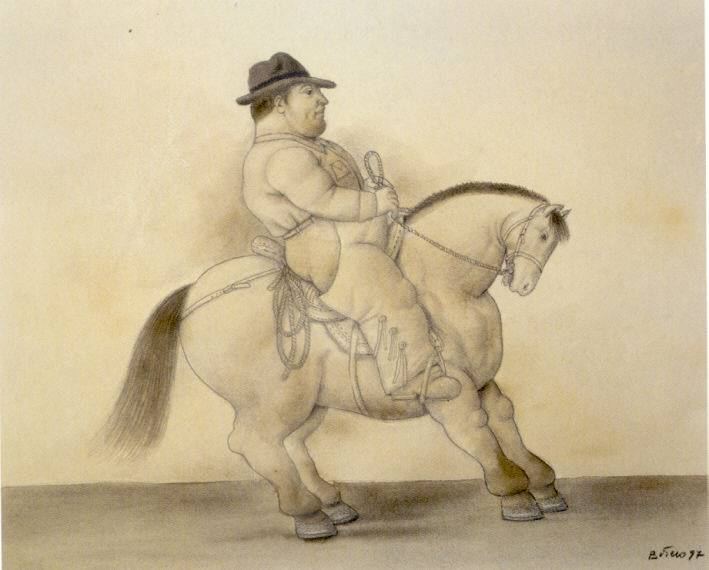
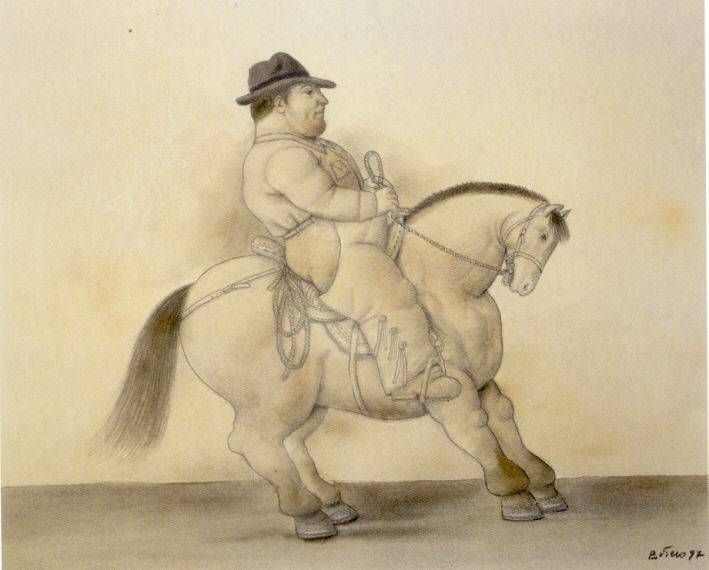
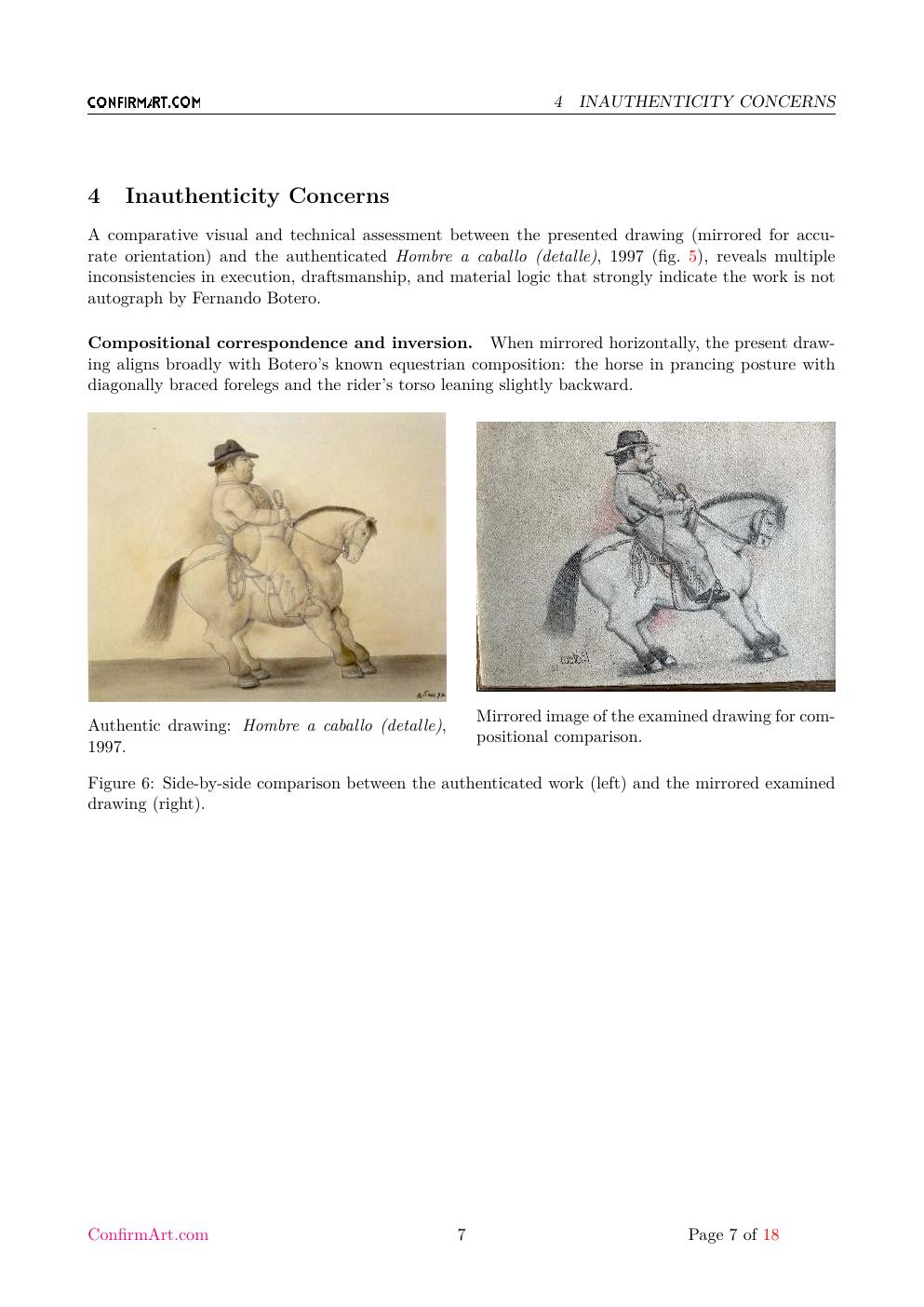
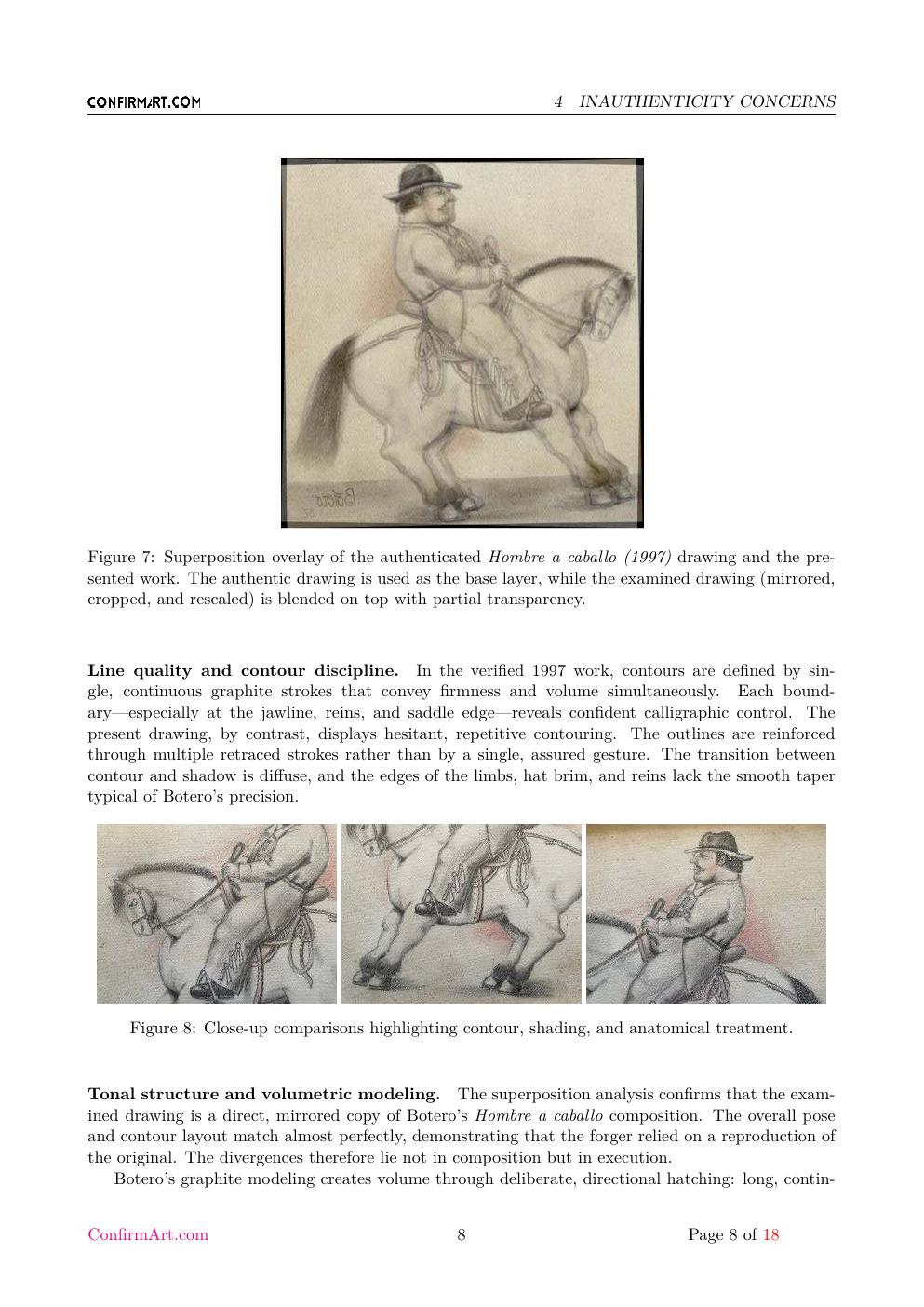
A comparative visual and technical assessment between the presented drawing (mirrored for accurate orientation) and the authenticated Hombre a caballo (detalle) , 1997 (fig. ), reveals multiple inconsistencies in execution, draftsmanship, and material logic that strongly indicate the work is not autograph by Fernando Botero. Compositional correspondence and inversion.
05
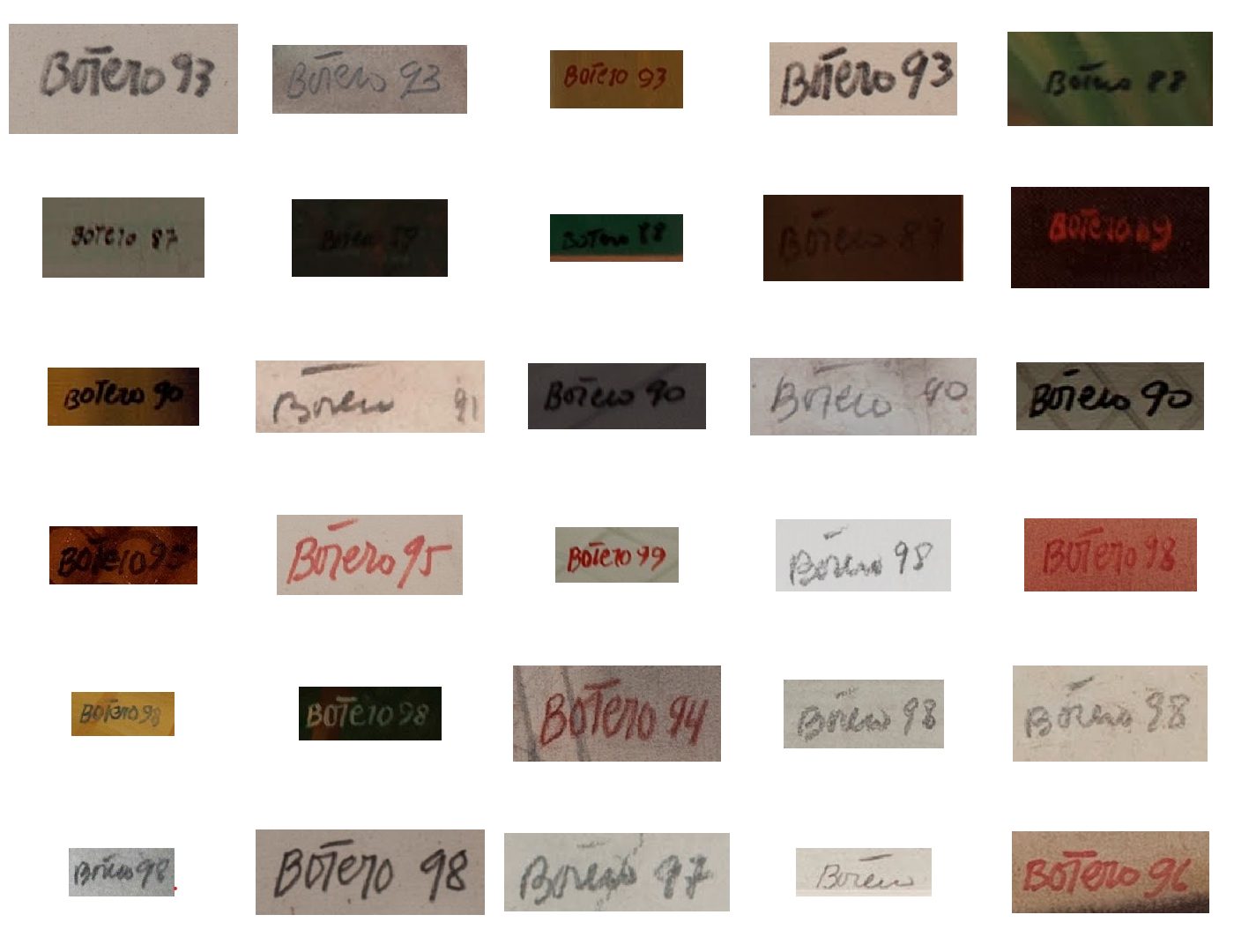
Signature analysis (Q1)
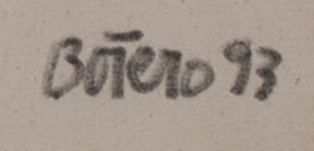
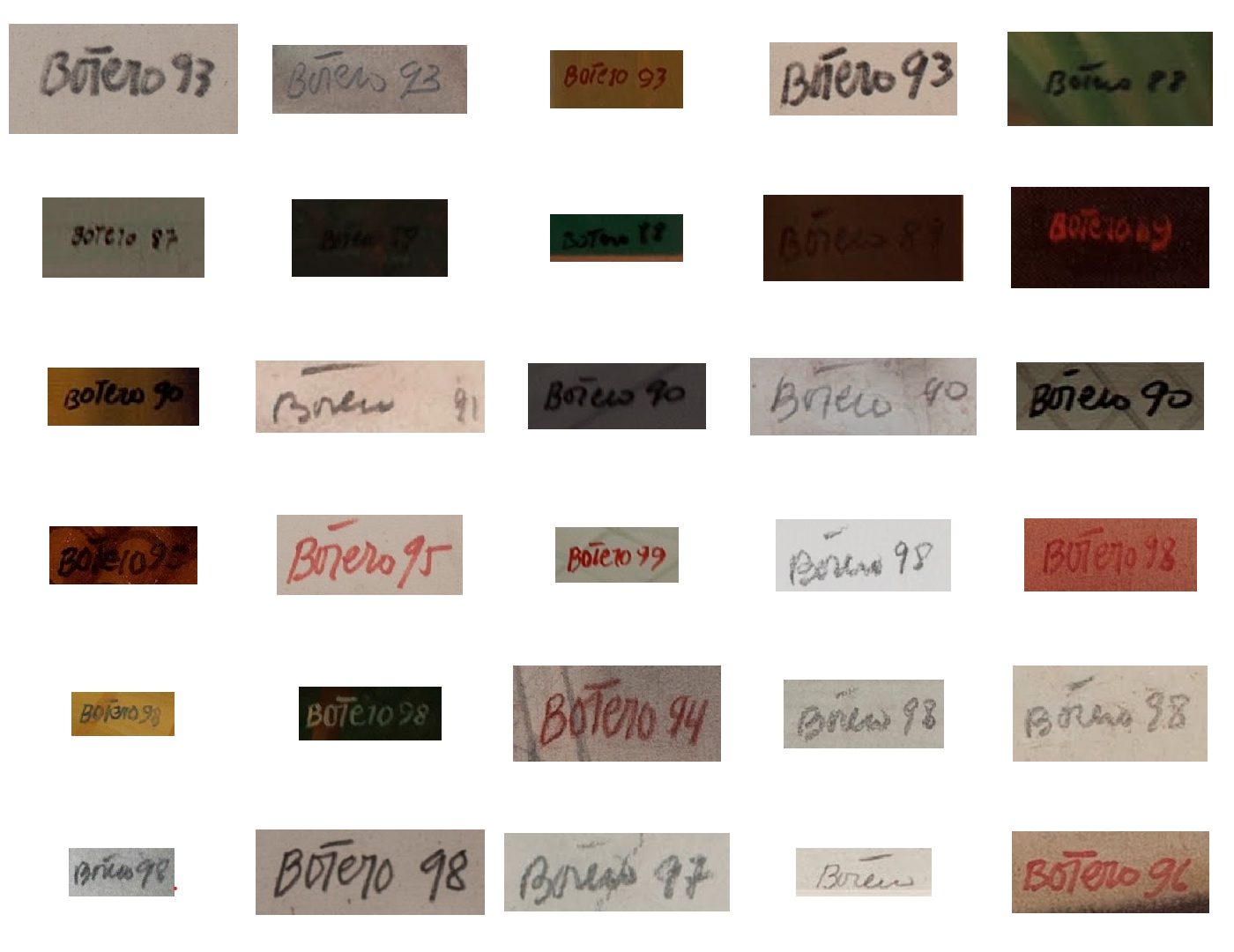
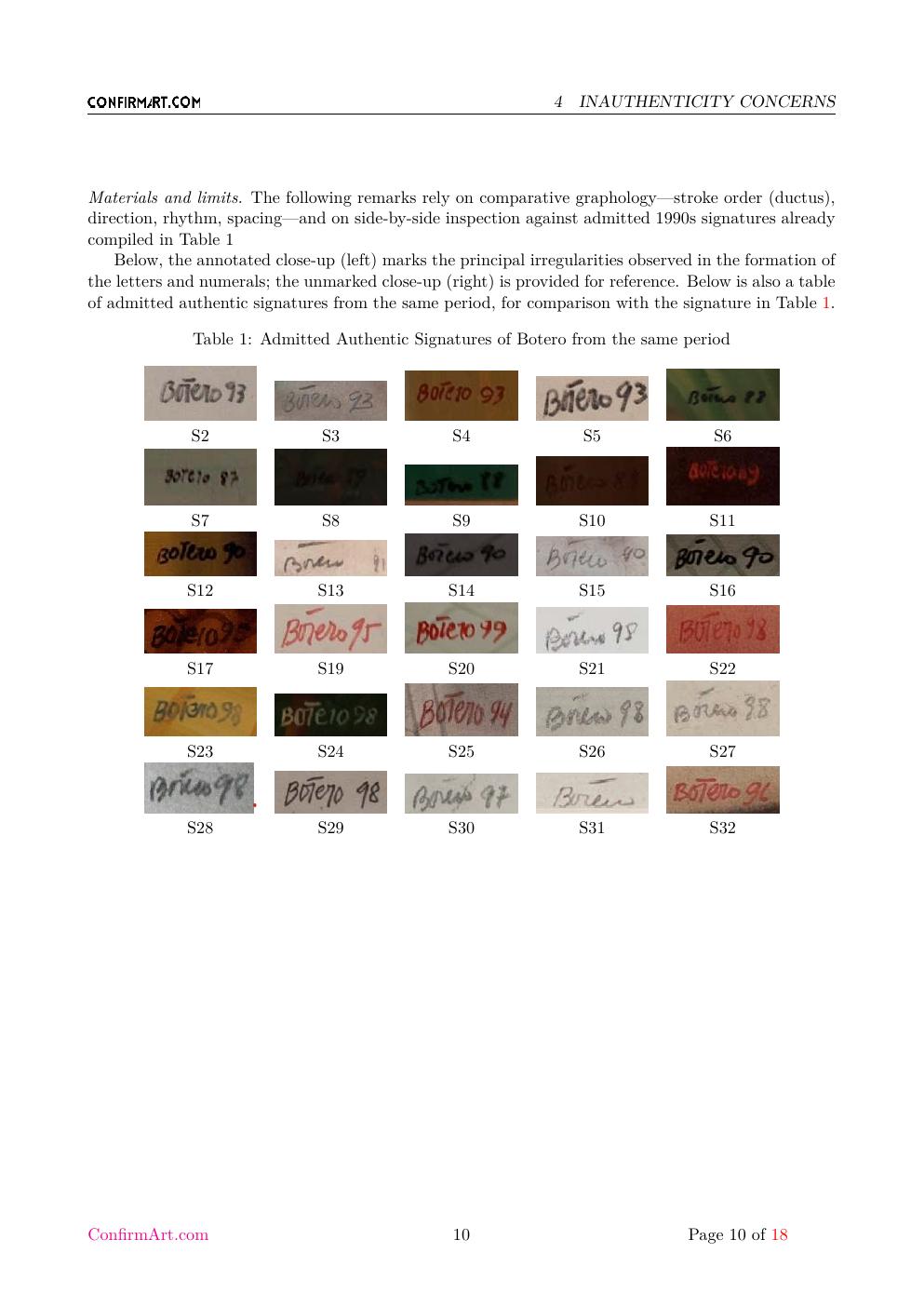
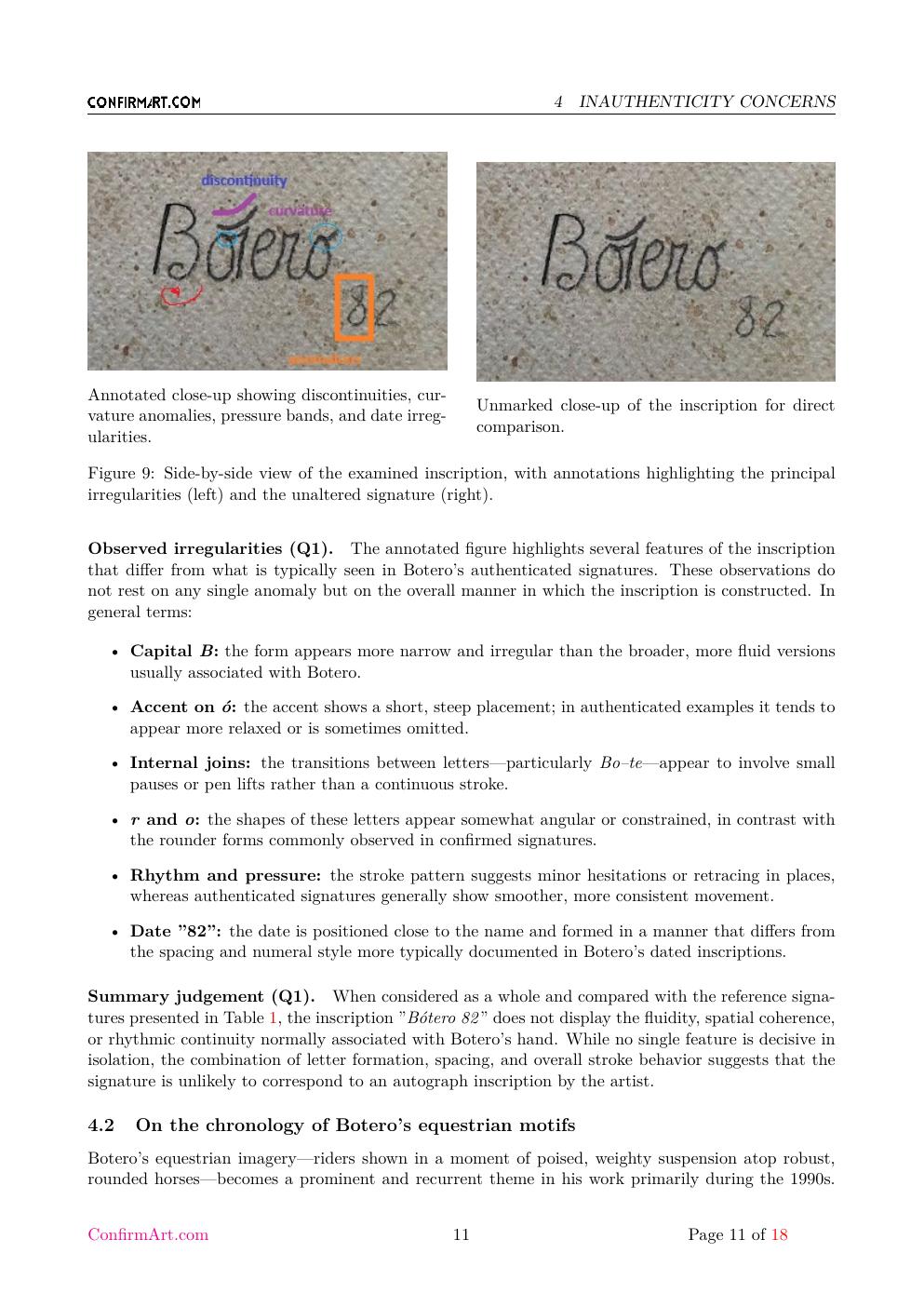
The inscription " Bótero 82 " shows multiple departures from the morphology, stroke order (ductus), and rhythmic flow found in authenticated signatures from the 1980s–1990s. ), the inscription presents structural and kinetic irregularities incompatible with Botero's autograph hand. These departures are visible even without magnification and persist under side-by-side comparison with admitted signatures (Table ).
06
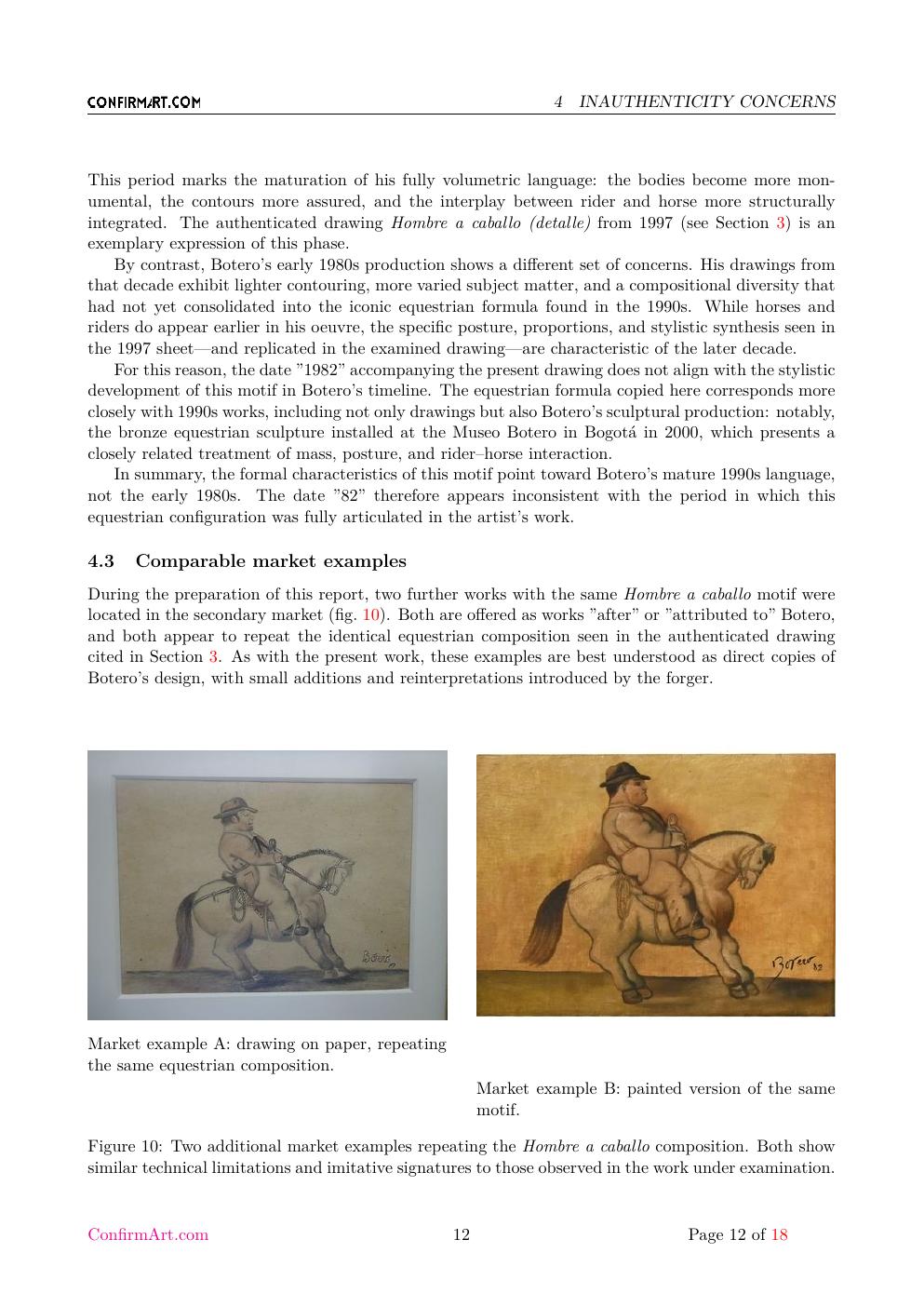
Comparable market examples
During the preparation of this report, two further works with the same Hombre a caballo motif were located in the secondary market (fig. Both are offered as works "after" or "attributed to" Botero, and both appear to repeat the identical equestrian composition seen in the authenticated drawing cited in Section . As with the present work, these examples are best understood as direct copies of Botero's design, with small additions and reinterpretations introduced by the forger.
Signature evidence
Signature analysis reference tables
Signature analysis (Q1)The inscription " Bótero 82 " shows multiple departures from the morphology, stroke order (ductus), and rhythmic flow found in authenticated signatures from the 1980s–1990s. ), the inscription presents structural and kinetic irregularities incompatible with Botero's autograph hand.
Authentication evidence
Selected close details from the human review
Provenance, Documentation, Stamps, and LabelsAccording to the current custodian, the artwork was acquired from a local gallery in the United States, specifically through Reeves Gallery in Houston, Texas. Reeves Gallery typically sources artworks through estate sales, private liquidations, and miscellaneous secondary-market channels.Catalogue NoteBotero's equestrian imagery is one of the most persistent threads in his oeuvre from the late 1970s through the 1990s, a period in which he refined the iconic pairing of a massively volumetric horse and a compact, self-possessed rider. These works distill the artist's pursuit of "amplified" form—roundness as a vehicle for serenity and monumentality—while drawing on equestrian tInauthenticity ConcernsA comparative visual and technical assessment between the presented drawing (mirrored for accurate orientation) and the authenticated Hombre a caballo (detalle) , 1997 (fig. ), reveals multiple inconsistencies in execution, draftsmanship, and material logic that strongly indicate the work is not autograph by Fernando Botero.Signature analysis (Q1)The inscription " Bótero 82 " shows multiple departures from the morphology, stroke order (ductus), and rhythmic flow found in authenticated signatures from the 1980s–1990s. ), the inscription presents structural and kinetic irregularities incompatible with Botero's autograph hand.
Private authentication
Submit your artwork for a ConfirmArt review
Use this real case as a reference for the kind of evidence that can be organized in a private authentication report.
The public browser receives rendered pages, not a native PDF viewer or direct PDF URL. Public pixels can still be screen-captured; private commissioned reports remain controlled client deliverables.
QR verification
Traceable real case
This real case has a stable verification URL and source fingerprints. The QR code resolves to the public verification record for this case.
Only your email and service selection are needed to submit the request. Optional images, dimensions and notes can be added now or later.
Payment is requested only for the Authentication report. Catalogue search, advisory, restoration and local inspection requests are reviewed first so the scope can be confirmed.
Authentication is a human expert review. ConfirmArt may use AI for bounded research support such as database, image, book or provenance searches, but not as a classifier verdict.
Complete front image
Reverse, support, frame and condition details
Signature, inscriptions, labels or seals
Invoices, certificates, provenance or catalogues
Comparative images, references or previous opinions, if available