01
List of the Documents
The section organizes the available documentation and provenance signals so the artwork can be reviewed as a traceable object, not only as an image.

Real client case
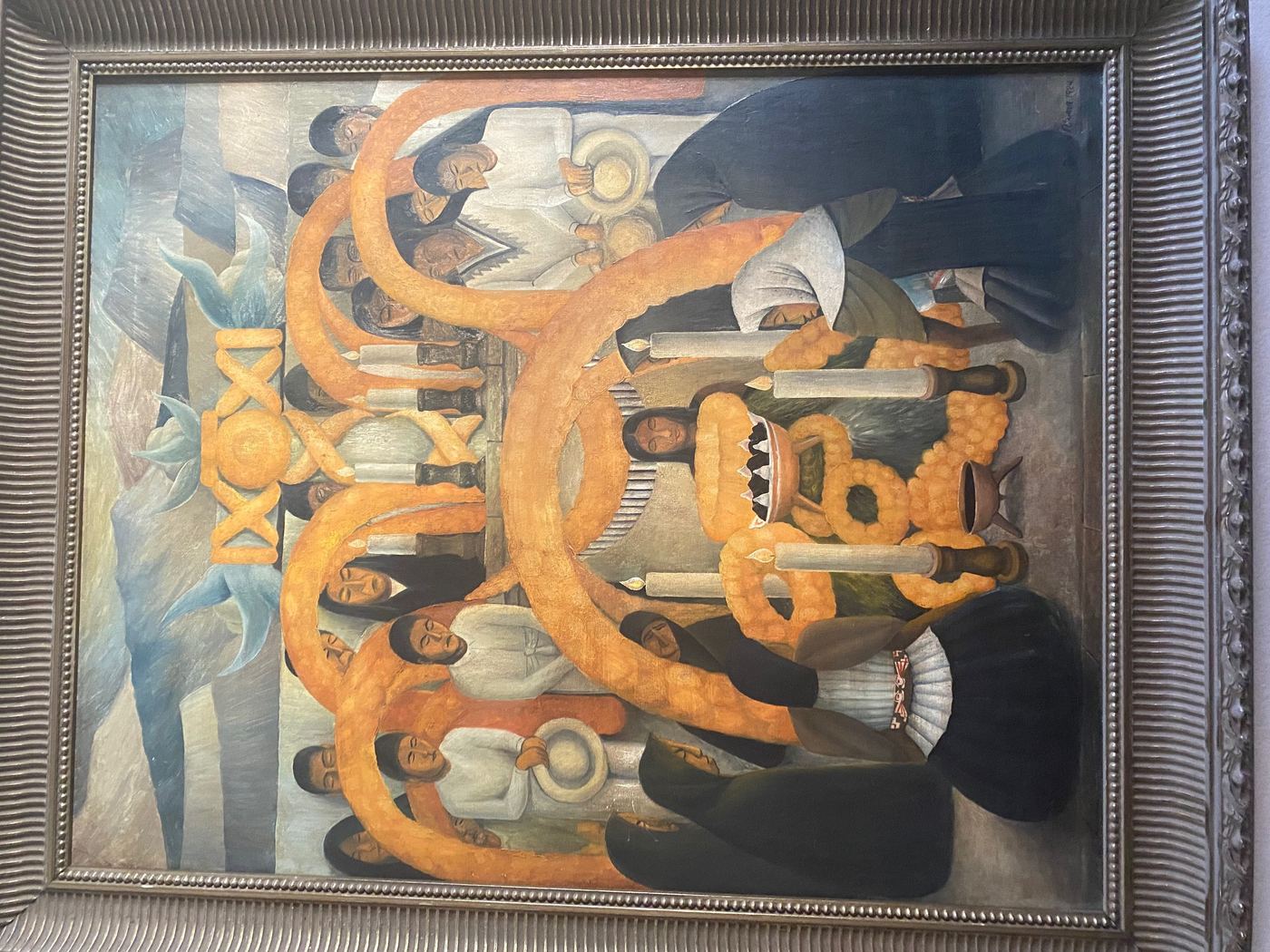
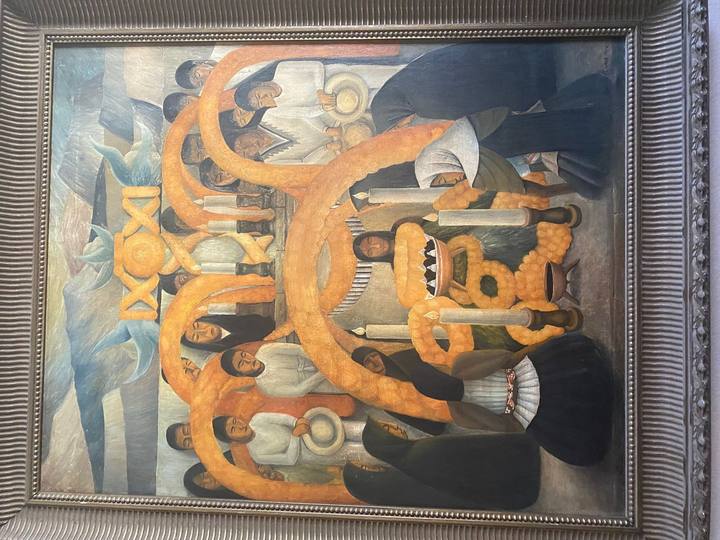
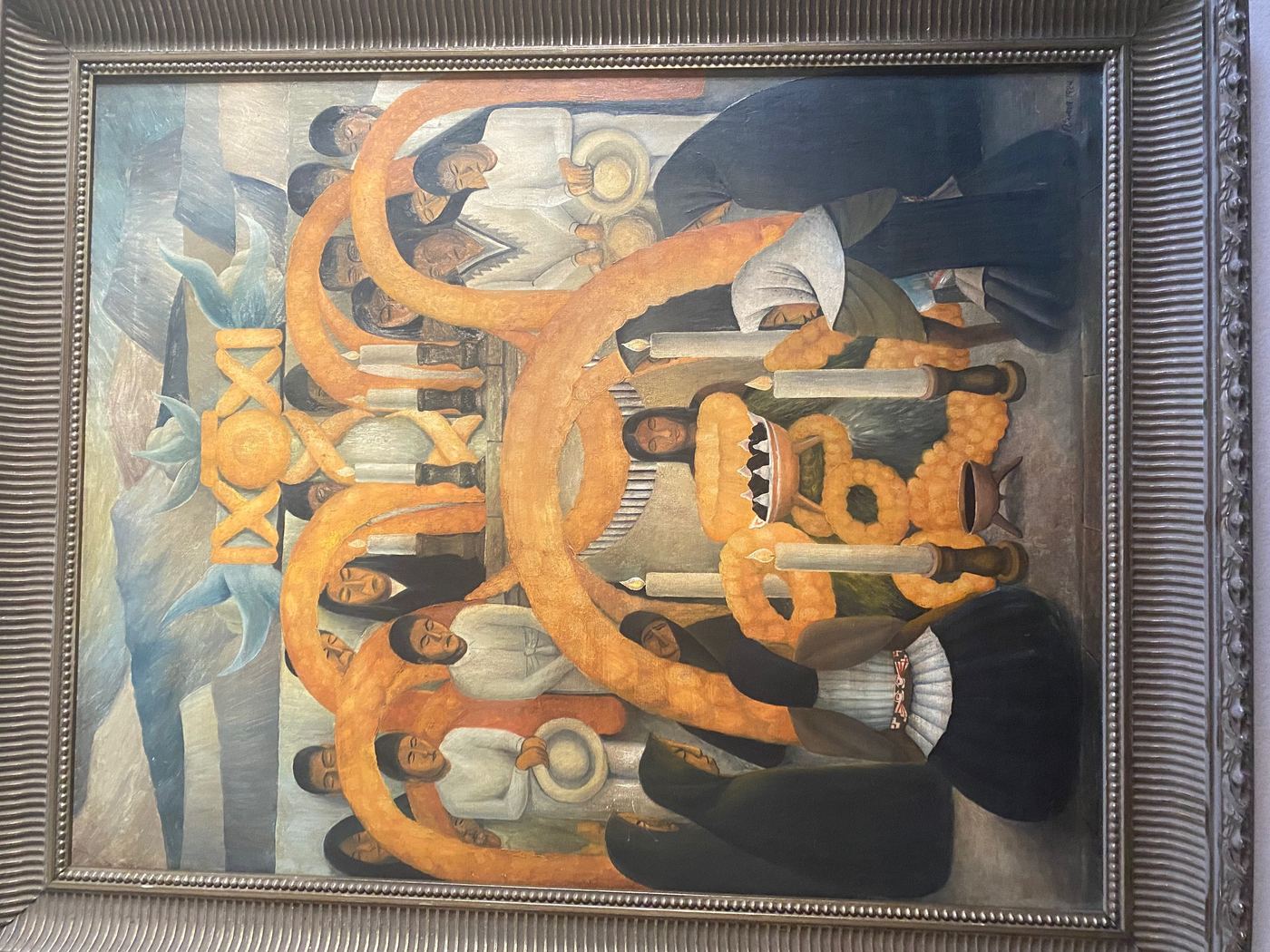
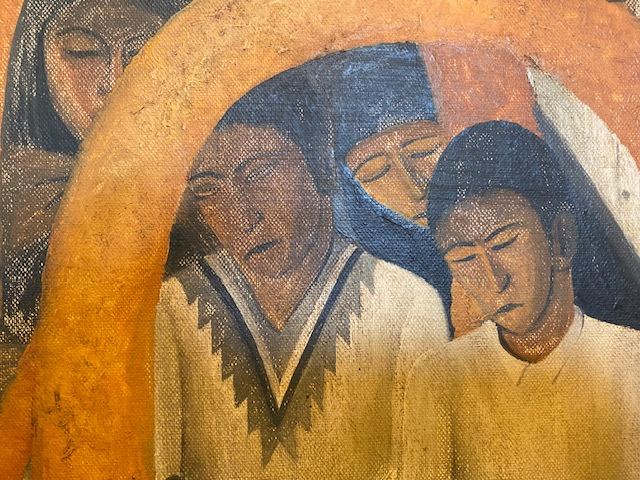
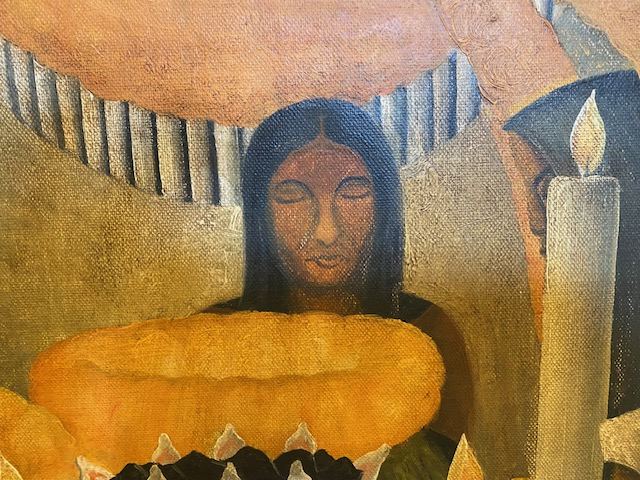
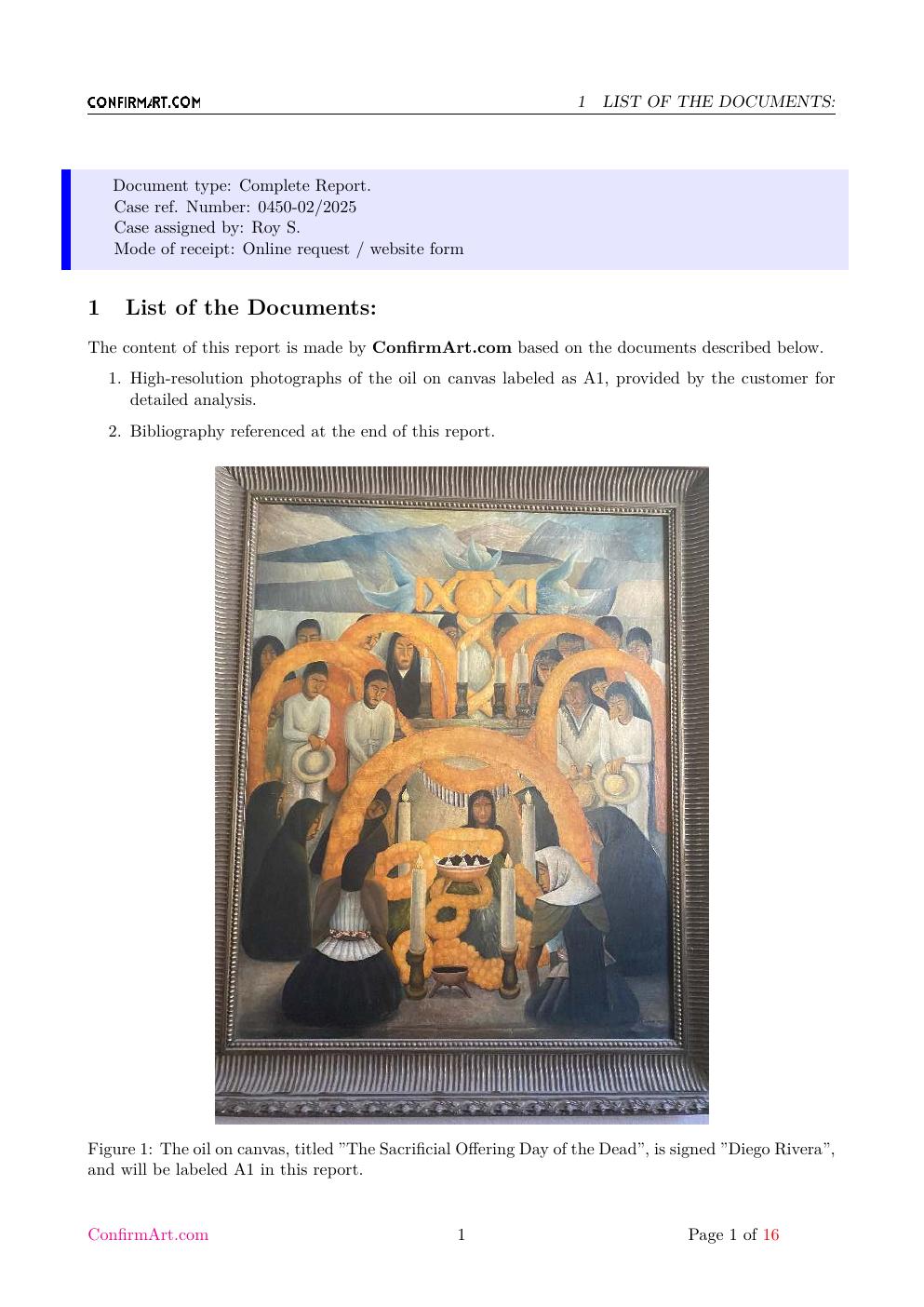
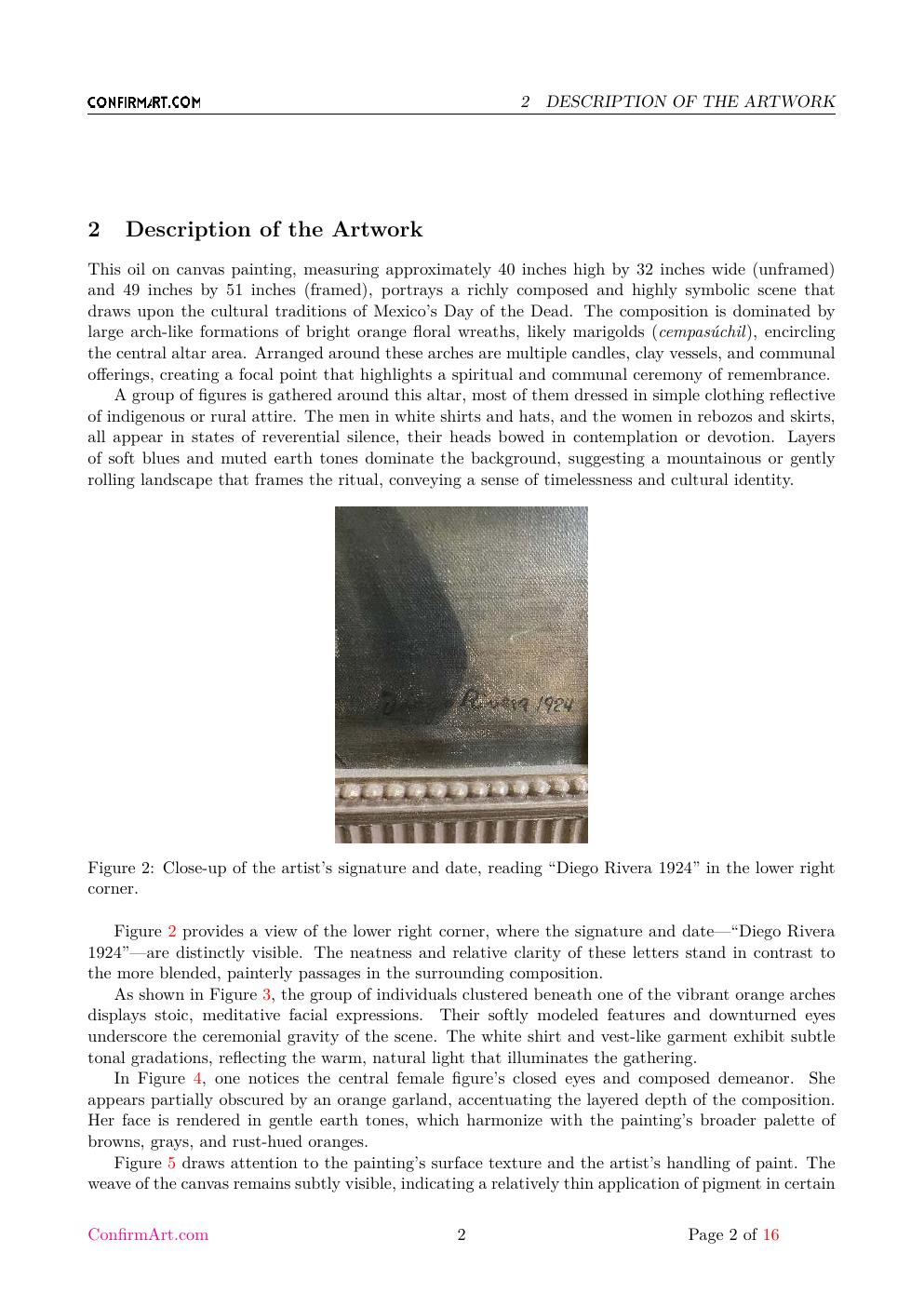
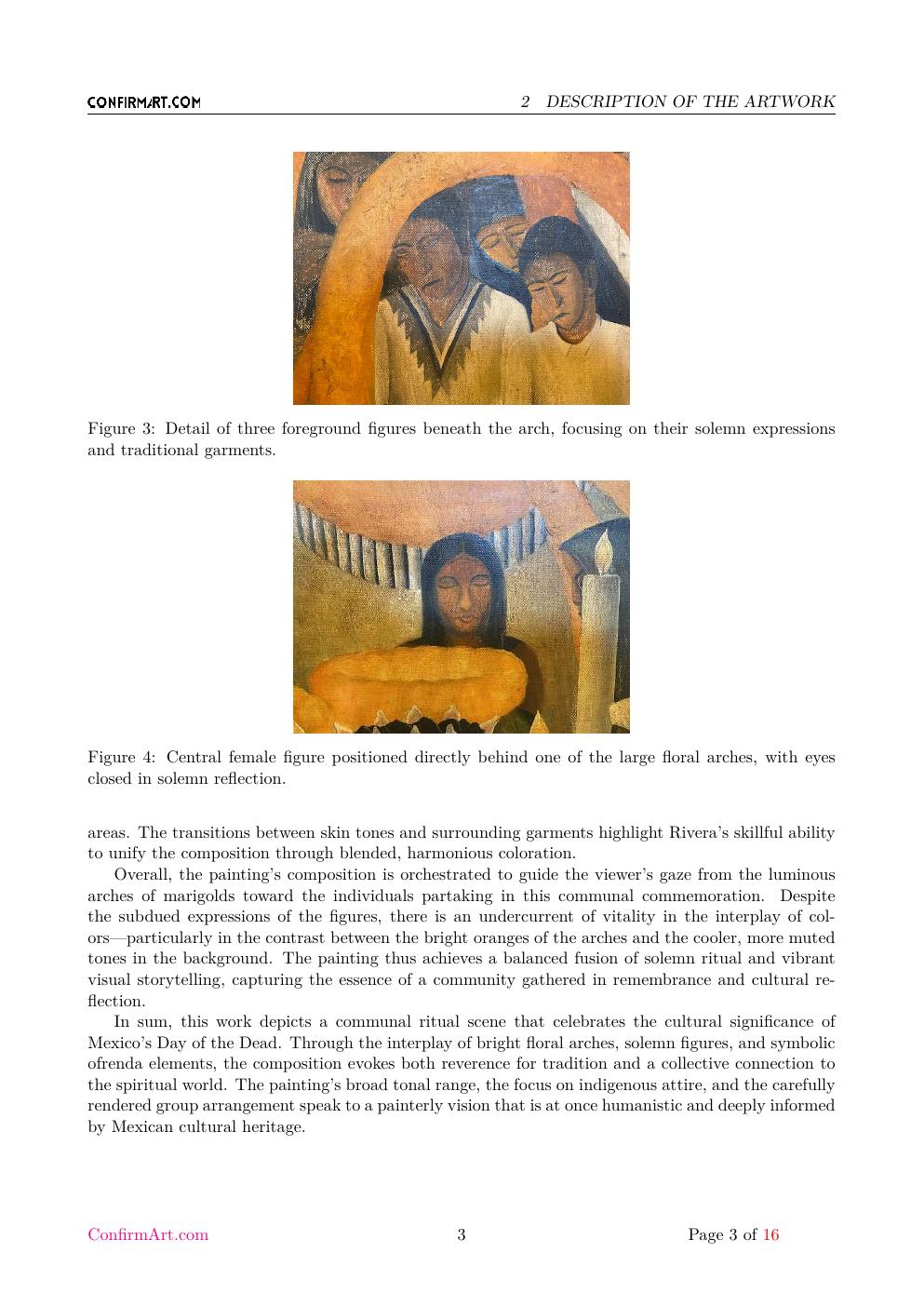
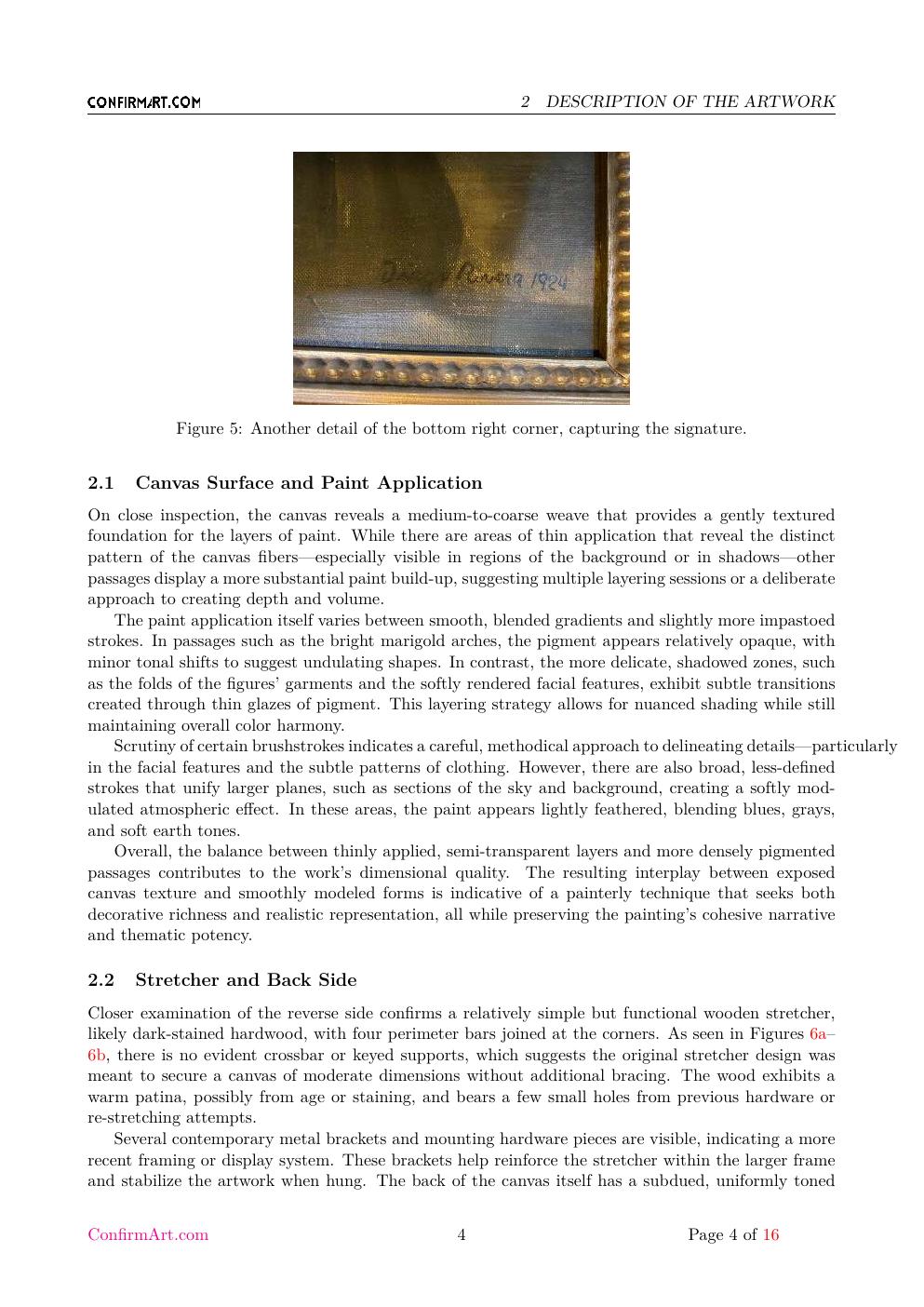
This oil on canvas painting, measuring approximately 40 inches high by 32 inches wide (unframed) and 49 inches by 51 inches (framed), portrays a richly composed and highly symbolic scene that draws upon the cultural traditions of Mexico's Day of the Dead. The composition is dominated by large arch-like formations of bright orange floral wreaths, likely marigolds ( cempasúchil ), encircling the central altar area. Arranged around these arches are multiple candles, clay vessels, and communal offerings, creating a focal point that highlights a spiritual and communal ceremony of remembrance. A group of figures is gathered around this altar, most of them dressed in simple clothing reflective of i
Selected evidence
Report structure
The section organizes the available documentation and provenance signals so the artwork can be reviewed as a traceable object, not only as an image.
This oil on canvas painting, measuring approximately 40 inches high by 32 inches wide (unframed) and 49 inches by 51 inches (framed), portrays a richly composed and highly symbolic scene that draws upon the cultural traditions of Mexico's Day of the Dead. The composition is dominated by large arch-like formations of bright orange floral wreaths, likely marigolds ( cempasúchil ), encircling the central altar area. Arranged around these arches are multiple candles, clay vessels, and communal offerings, creating a foc
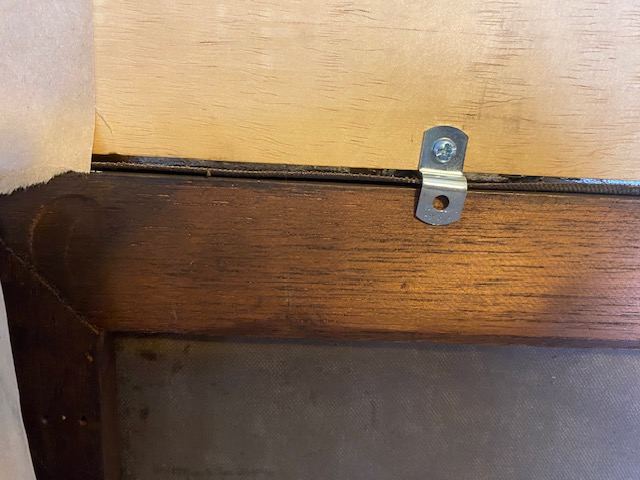
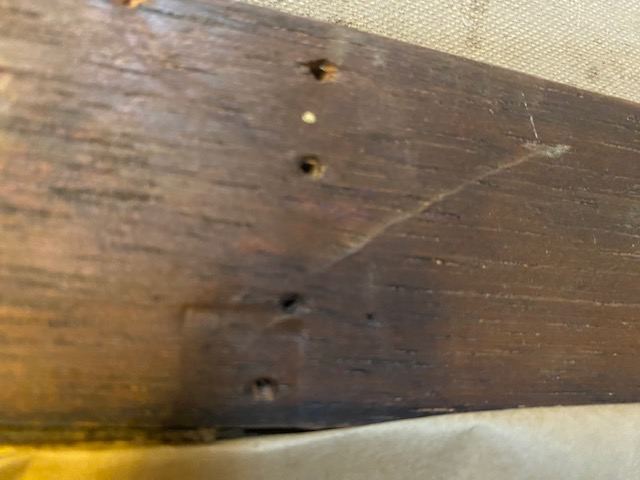
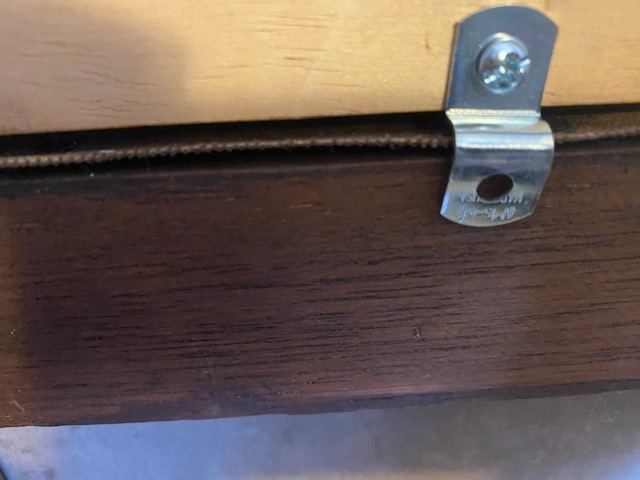
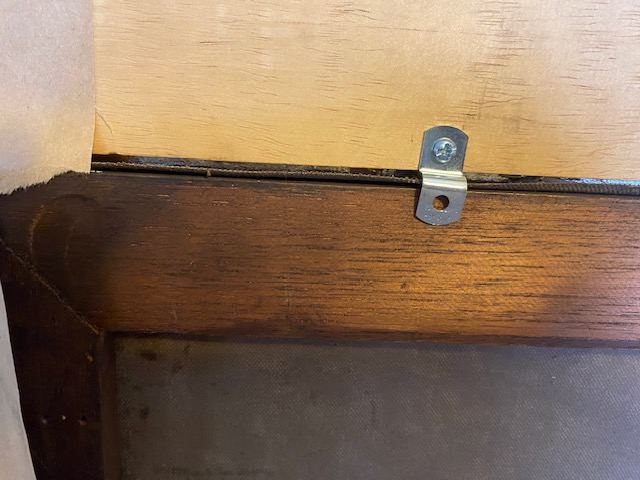
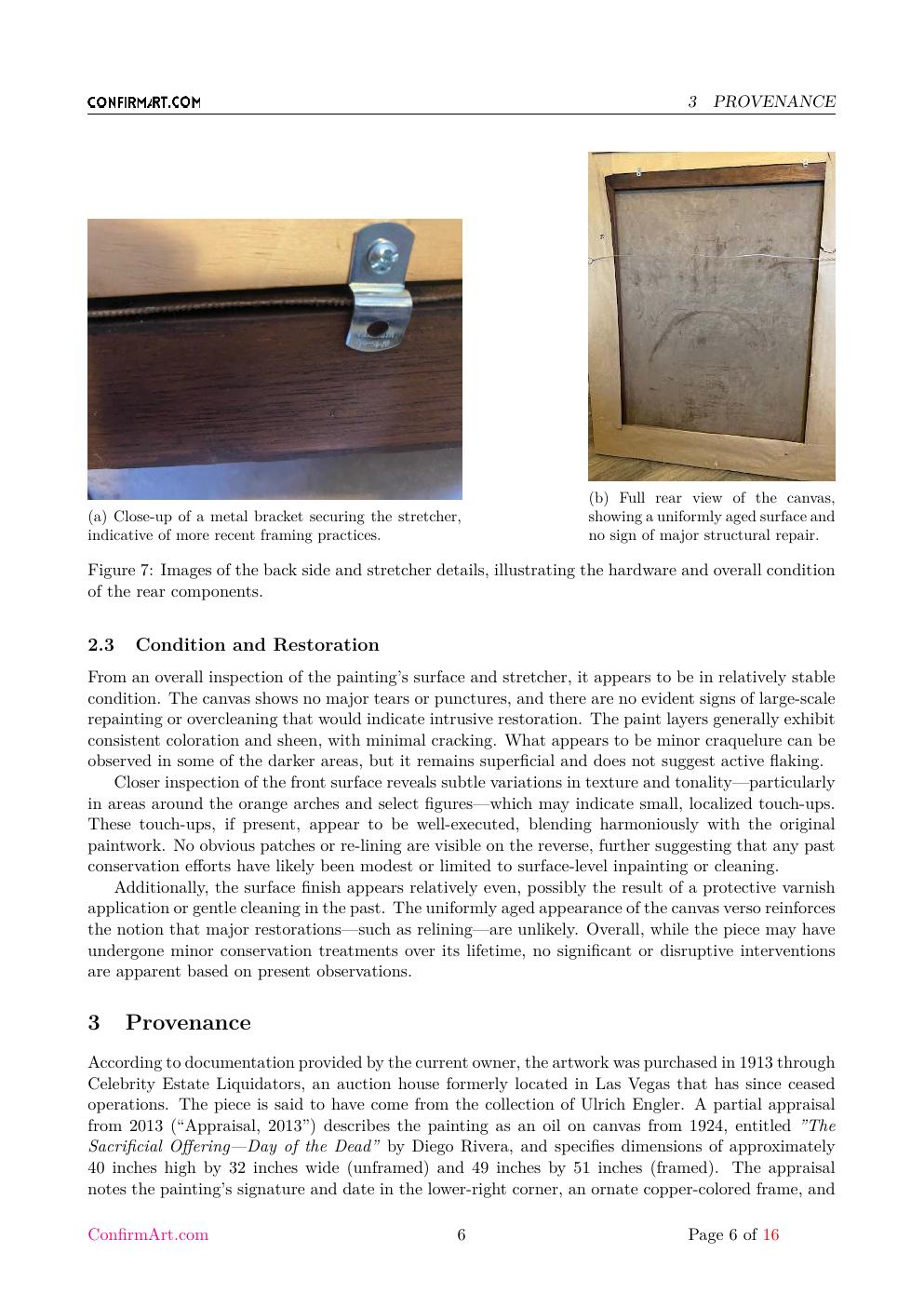
Closer examination of the reverse side confirms a relatively simple but functional wooden stretcher, likely dark-stained hardwood, with four perimeter bars joined at the corners. As seen in Figures -- , there is no evident crossbar or keyed supports, which suggests the original stretcher design was meant to secure a canvas of moderate dimensions without additional bracing. The wood exhibits a warm patina, possibly from age or staining, and bears a few small holes from previous hardware or re-stretching attempts.
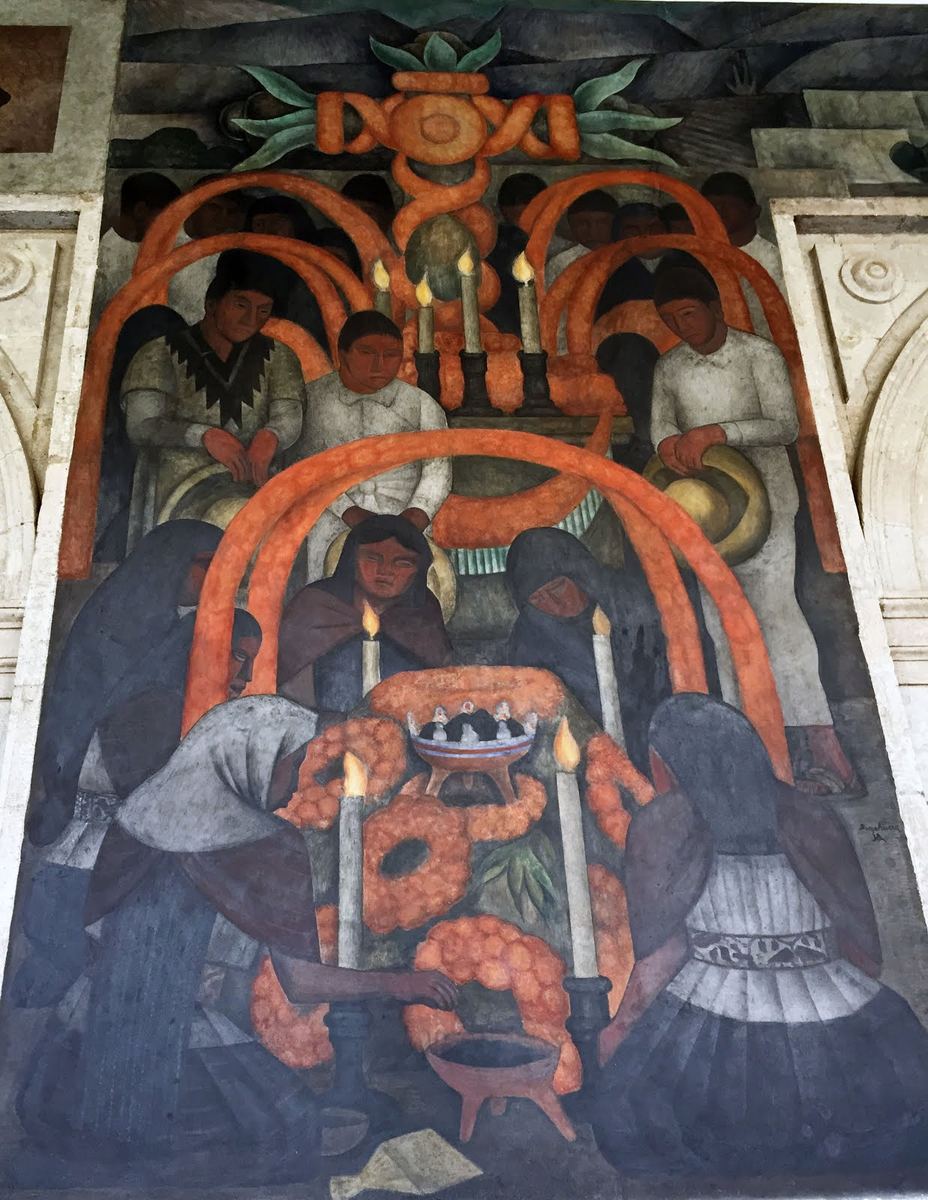
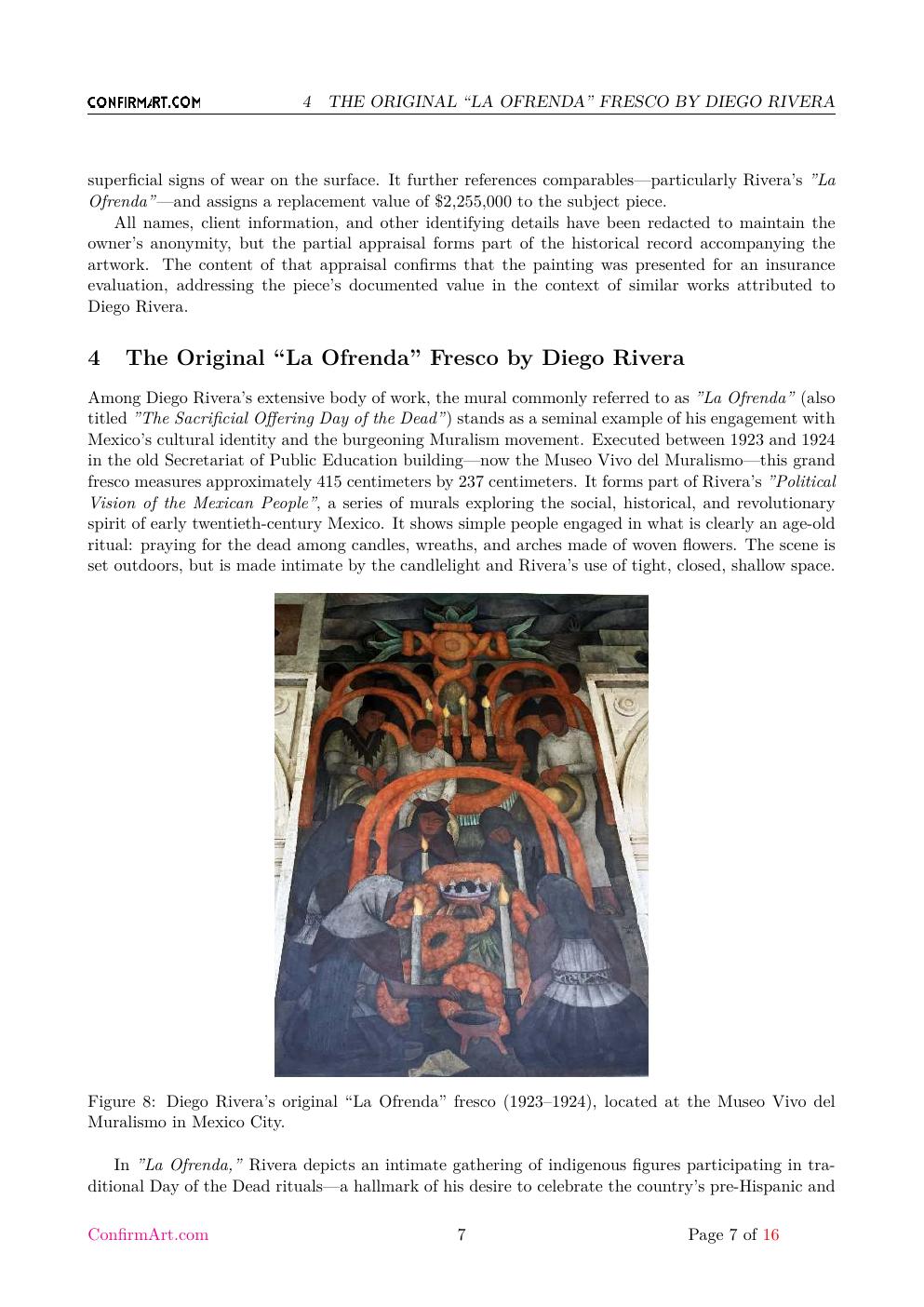
Among Diego Rivera's extensive body of work, the mural commonly referred to as "La Ofrenda" (also titled "The Sacrificial Offering Day of the Dead" ) stands as a seminal example of his engagement with Mexico's cultural identity and the burgeoning Muralism movement. Executed between 1923 and 1924 in the old Secretariat of Public Education building—now the Museo Vivo del Muralismo—this grand fresco measures approximately 415 centimeters by 237 centimeters. It forms part of Rivera's "Political Vision of the Mexican Pe
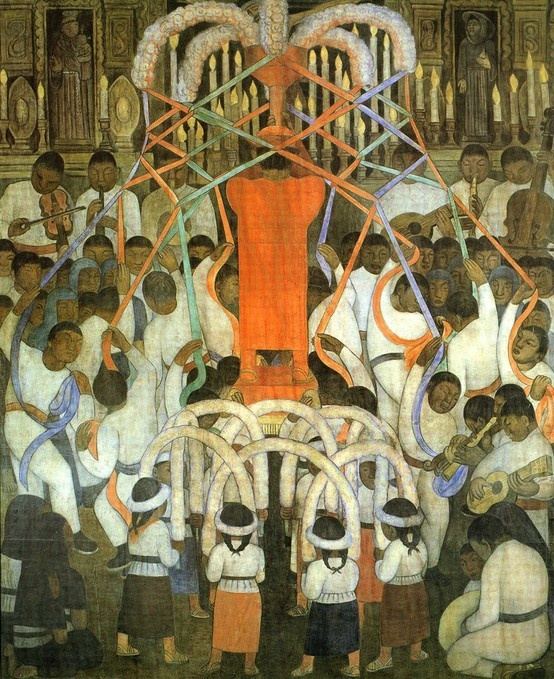
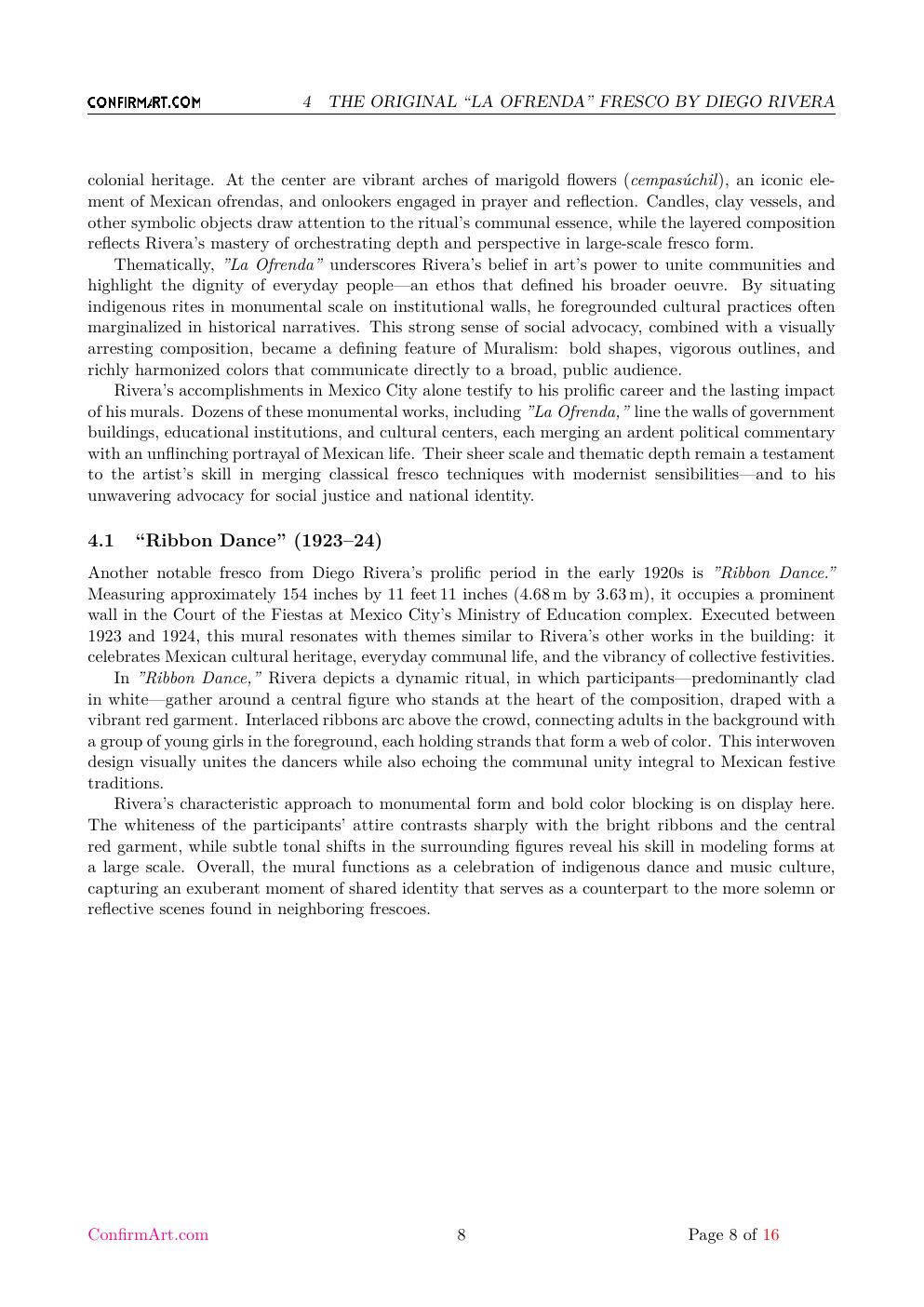
Another notable fresco from Diego Rivera's prolific period in the early 1920s is "Ribbon Dance." Measuring approximately 154 inches by 11 feet 11 inches (4.68 m by 3.63 m), it occupies a prominent wall in the Court of the Fiestas at Mexico City's Ministry of Education complex. Executed between 1923 and 1924, this mural resonates with themes similar to Rivera's other works in the building: it celebrates Mexican cultural heritage, everyday communal life, and the vibrancy of collective festivities. In "Ribbon Dance,"
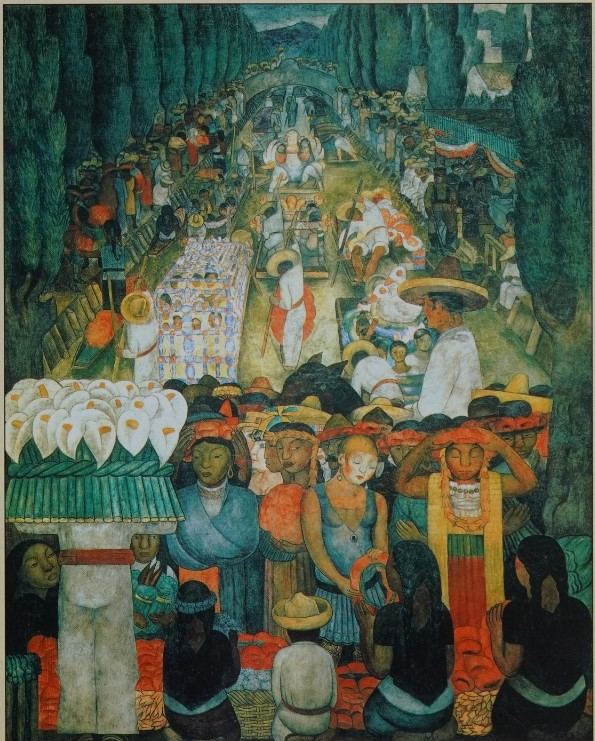
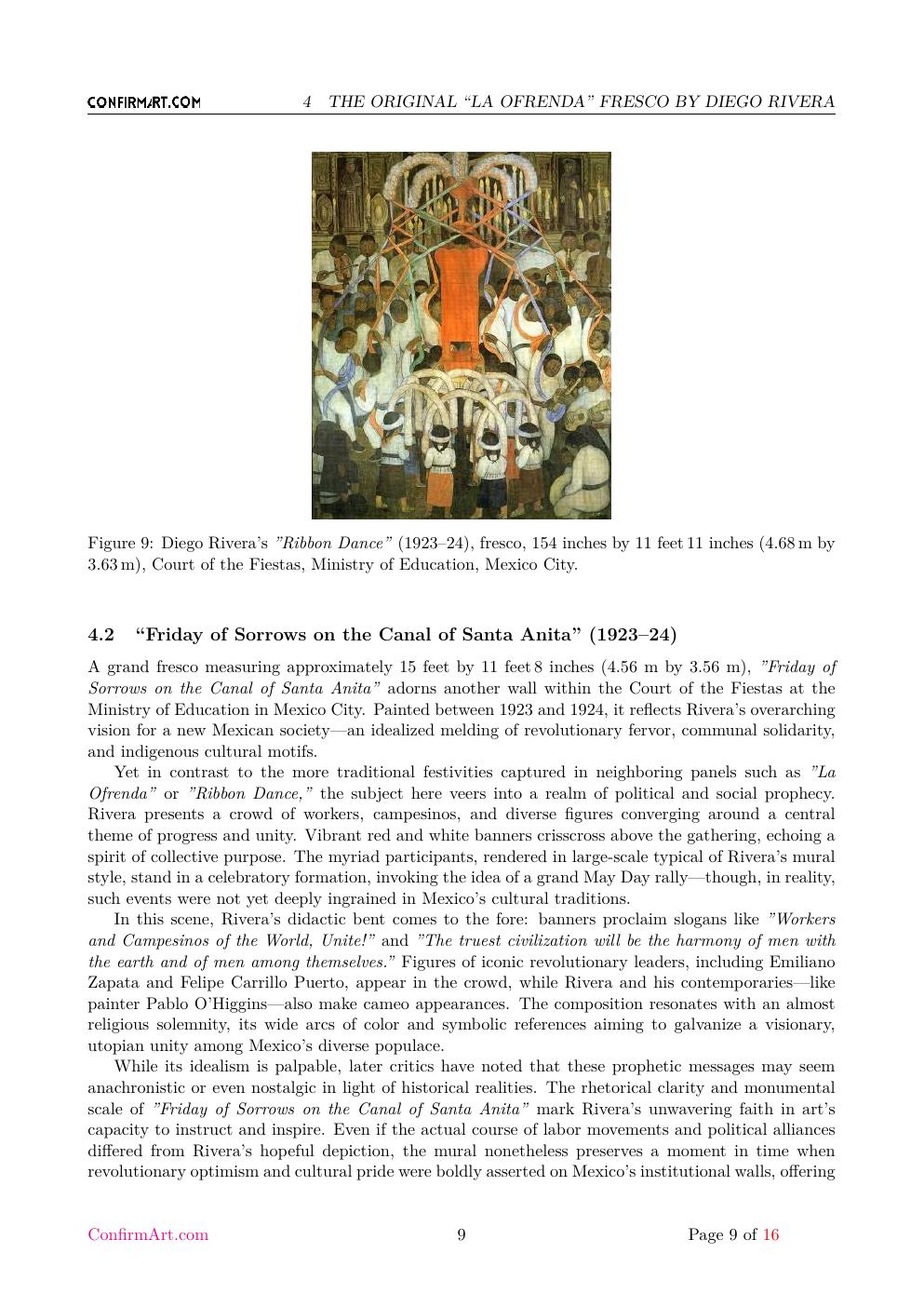
A grand fresco measuring approximately 15 feet by 11 feet 8 inches (4.56 m by 3.56 m), "Friday of Sorrows on the Canal of Santa Anita" adorns another wall within the Court of the Fiestas at the Ministry of Education in Mexico City. Painted between 1923 and 1924, it reflects Rivera's overarching vision for a new Mexican society—an idealized melding of revolutionary fervor, communal solidarity, and indigenous cultural motifs. Yet in contrast to the more traditional festivities captured in neighboring panels such as "
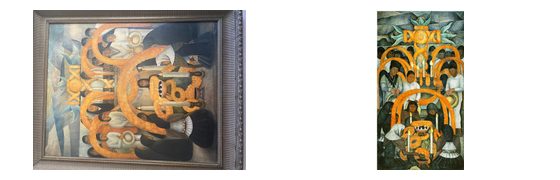
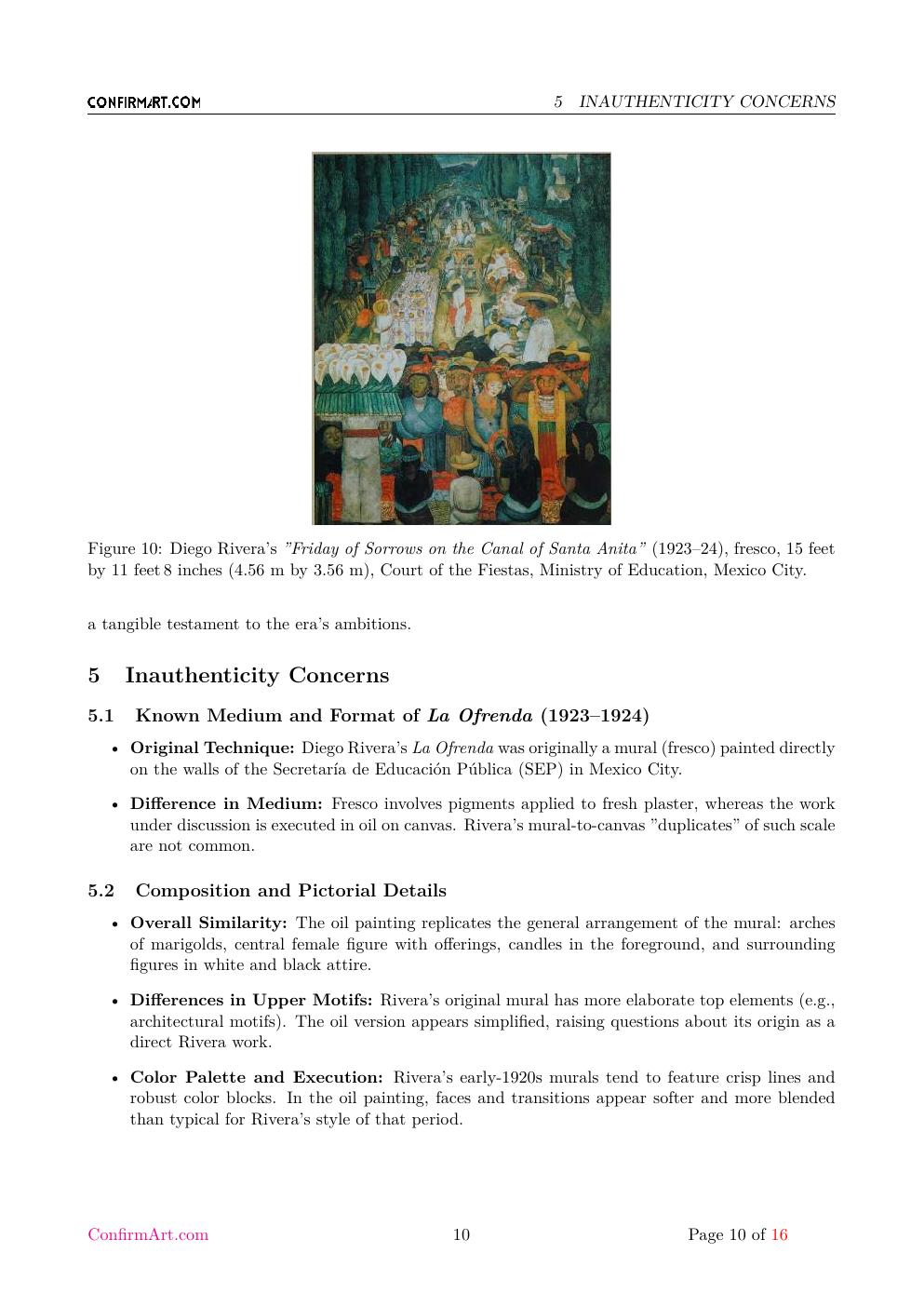
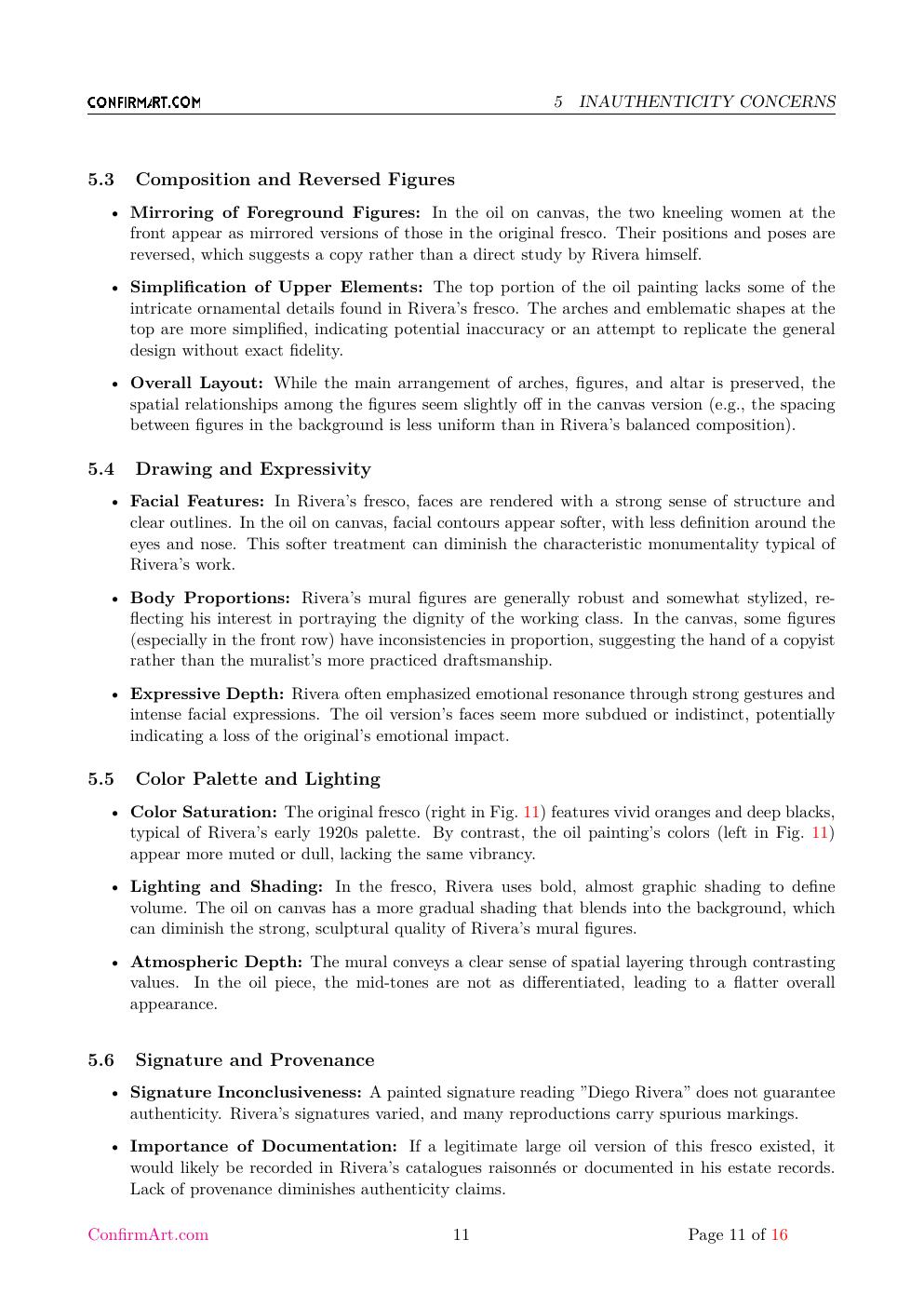
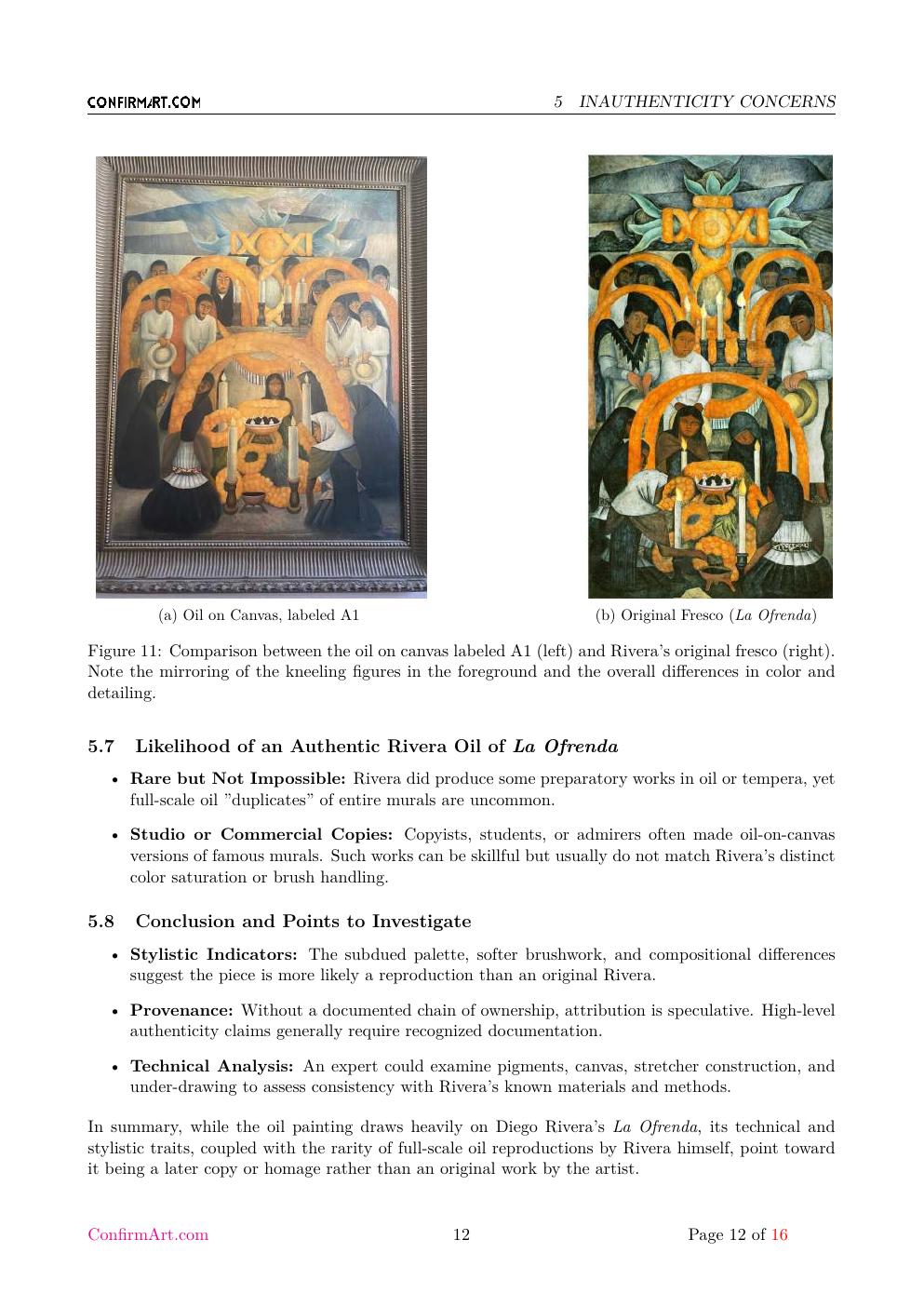
Color Saturation: The original fresco (right in Fig. ) features vivid oranges and deep blacks, typical of Rivera's early 1920s palette. By contrast, the oil painting's colors (left in Fig.
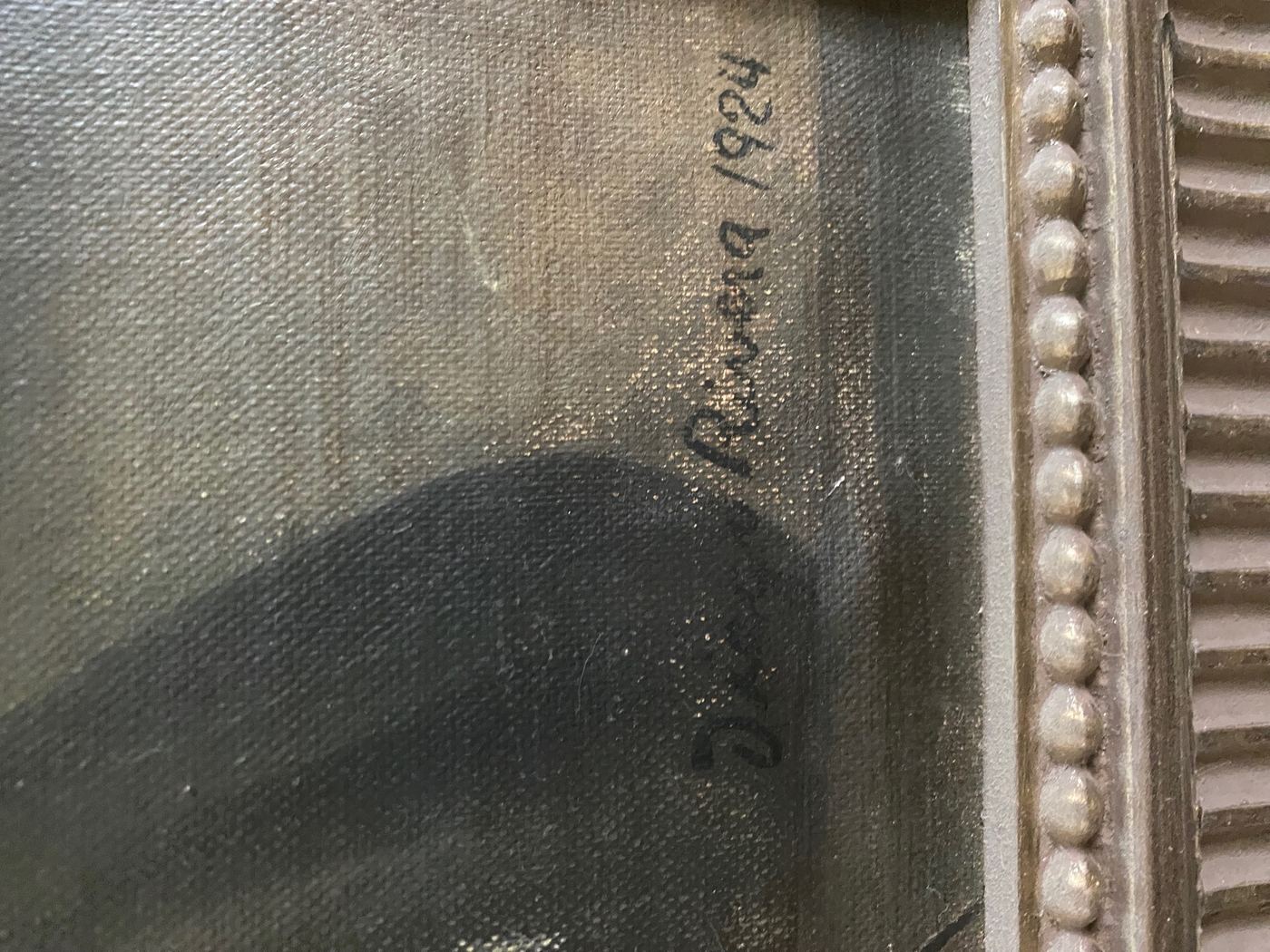
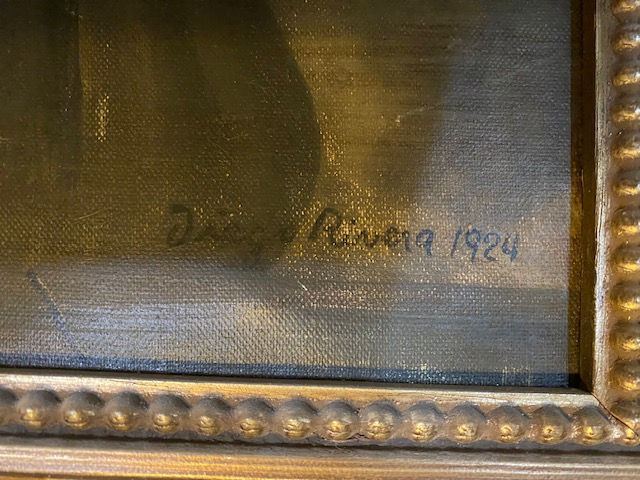
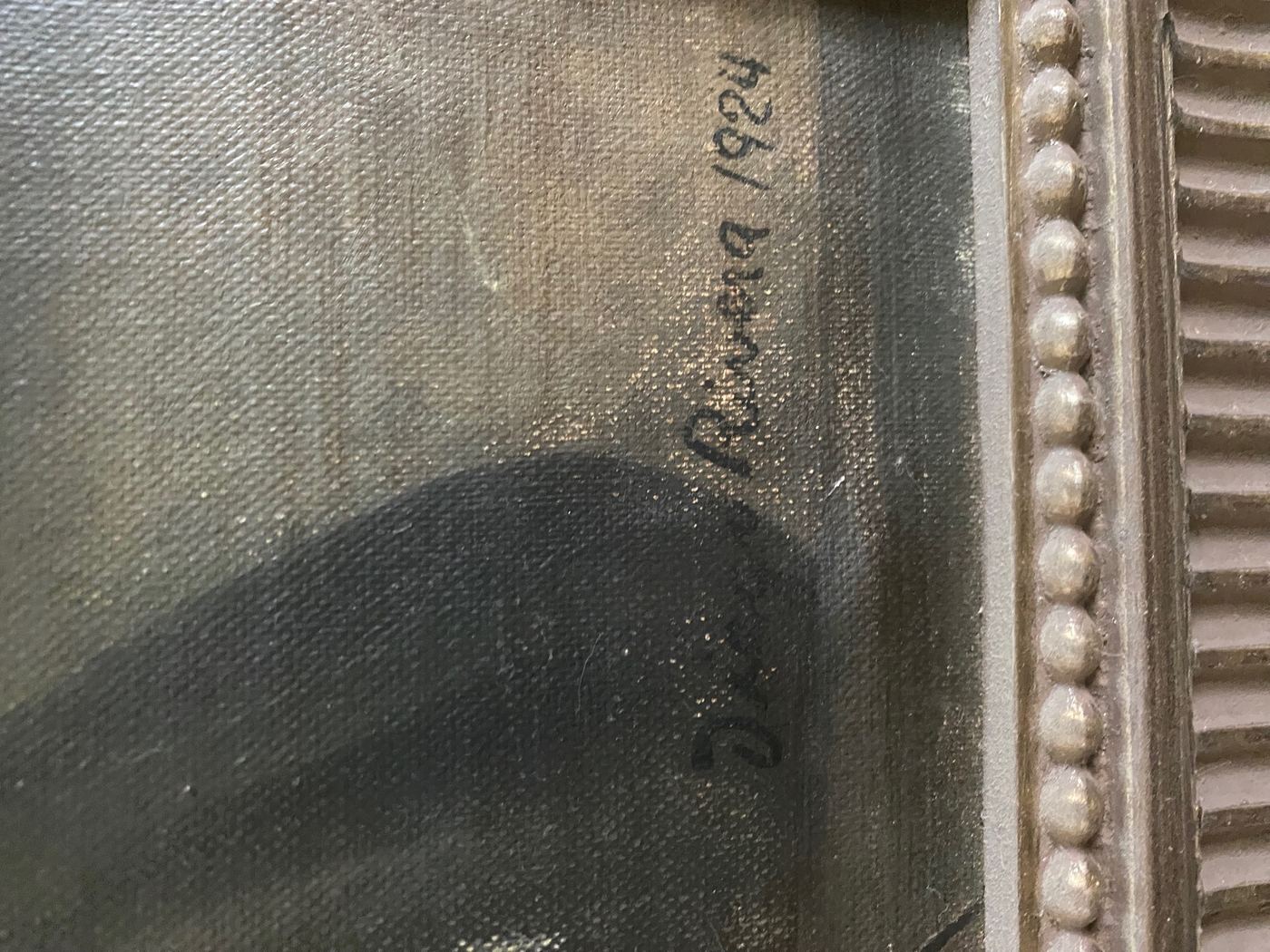
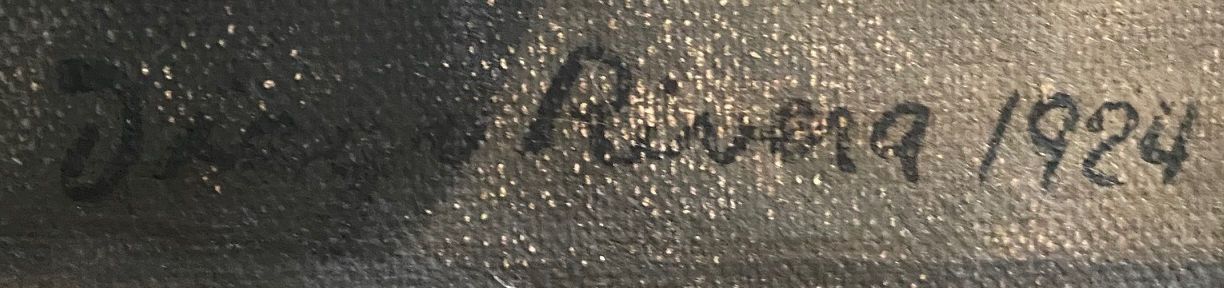
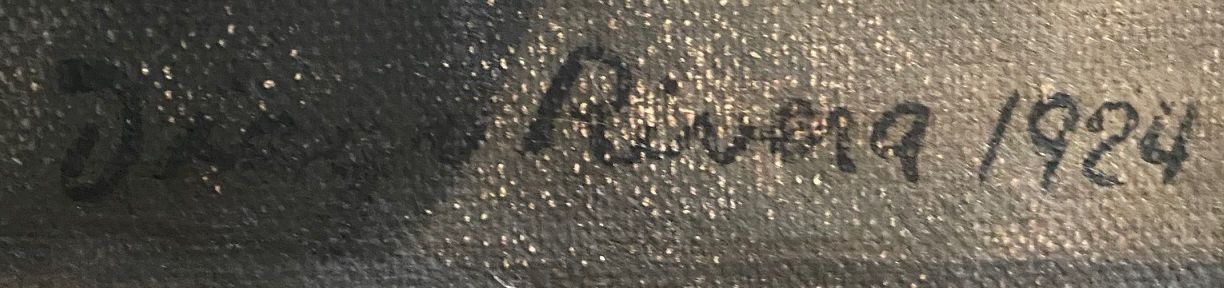
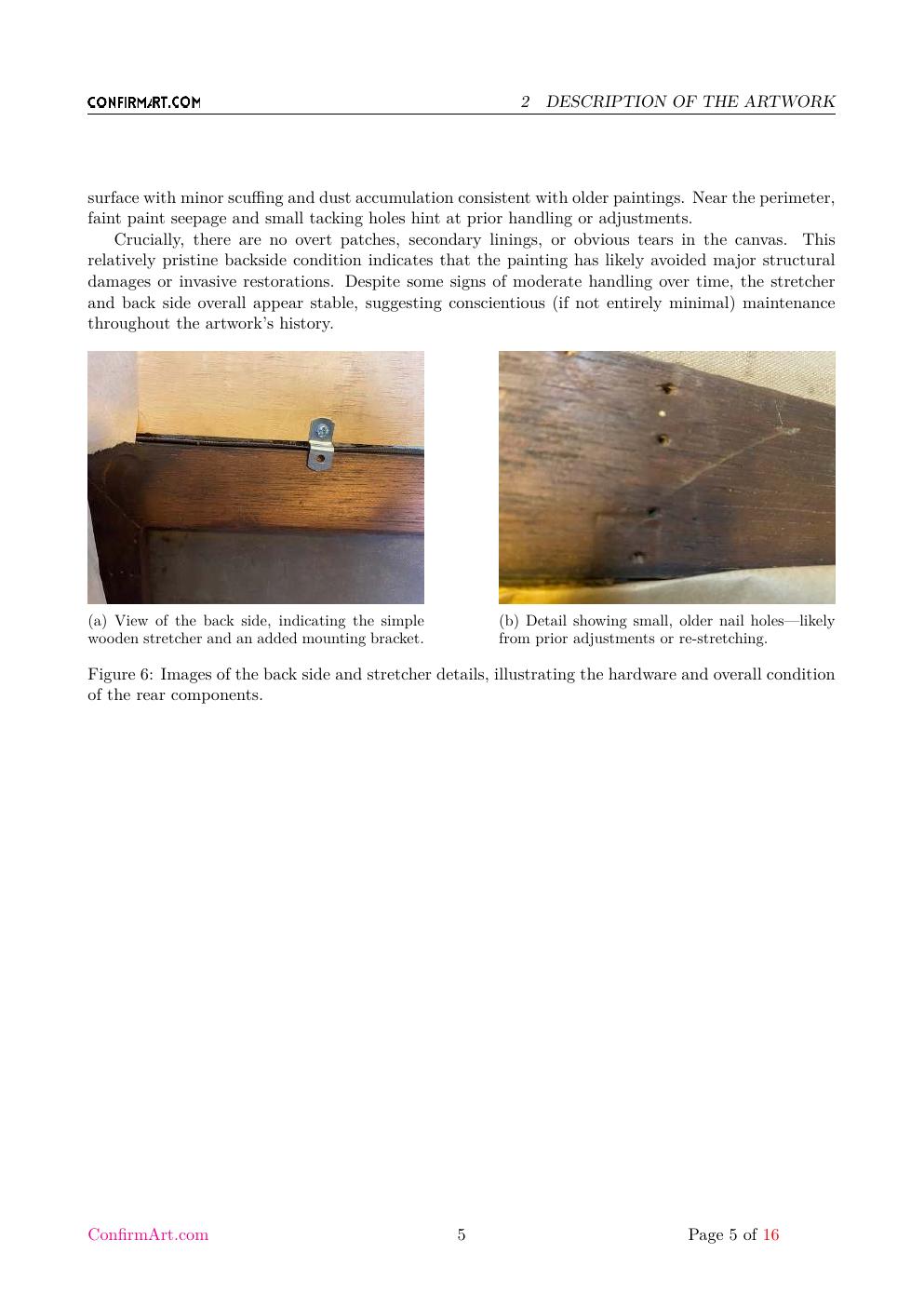
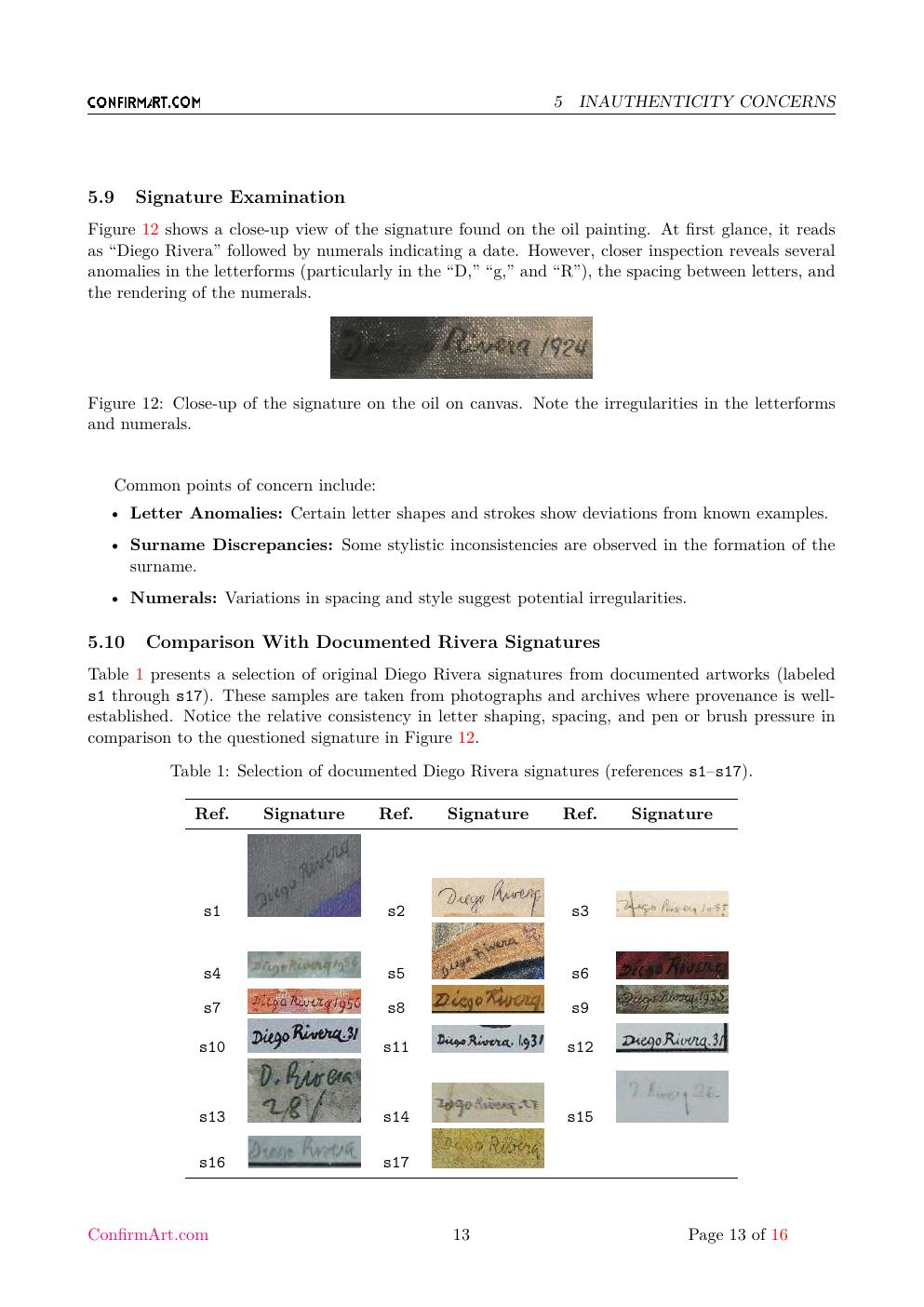
Figure shows a close‐up view of the signature found on the oil painting. At first glance, it reads as "Diego Rivera" followed by numerals indicating a date. However, closer inspection reveals several anomalies in the letterforms (particularly in the "D," "g," and "R"), the spacing between letters, and the rendering of the numerals.
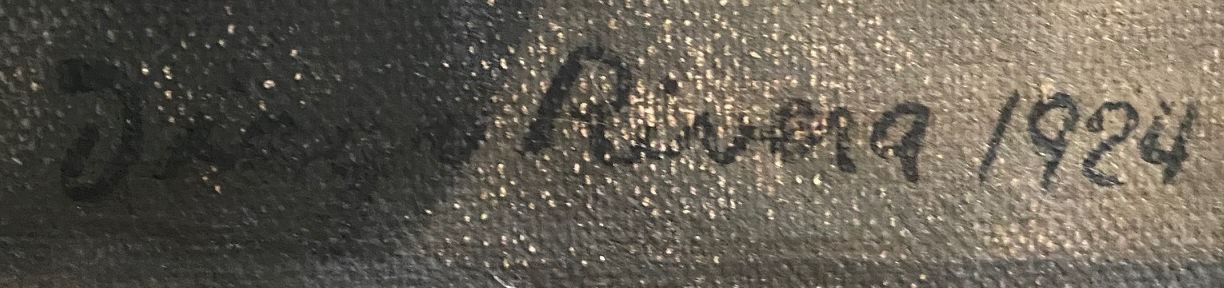
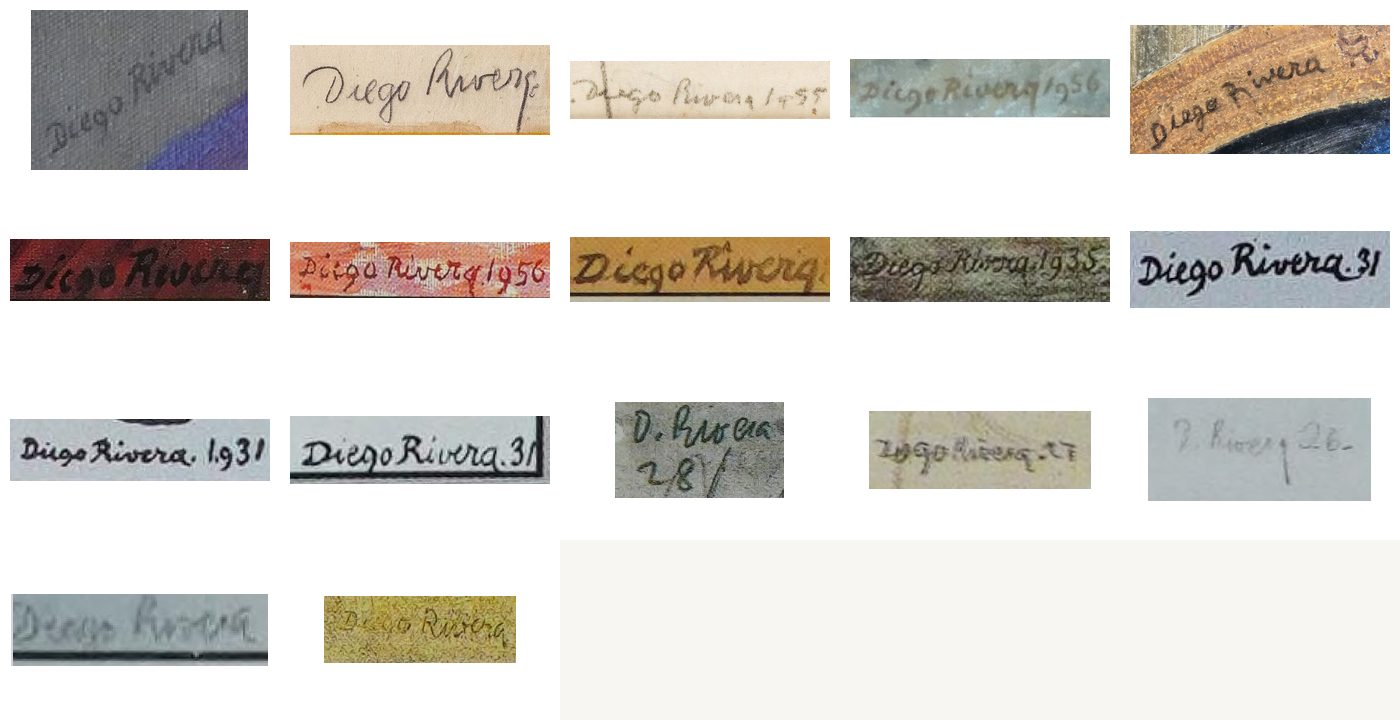
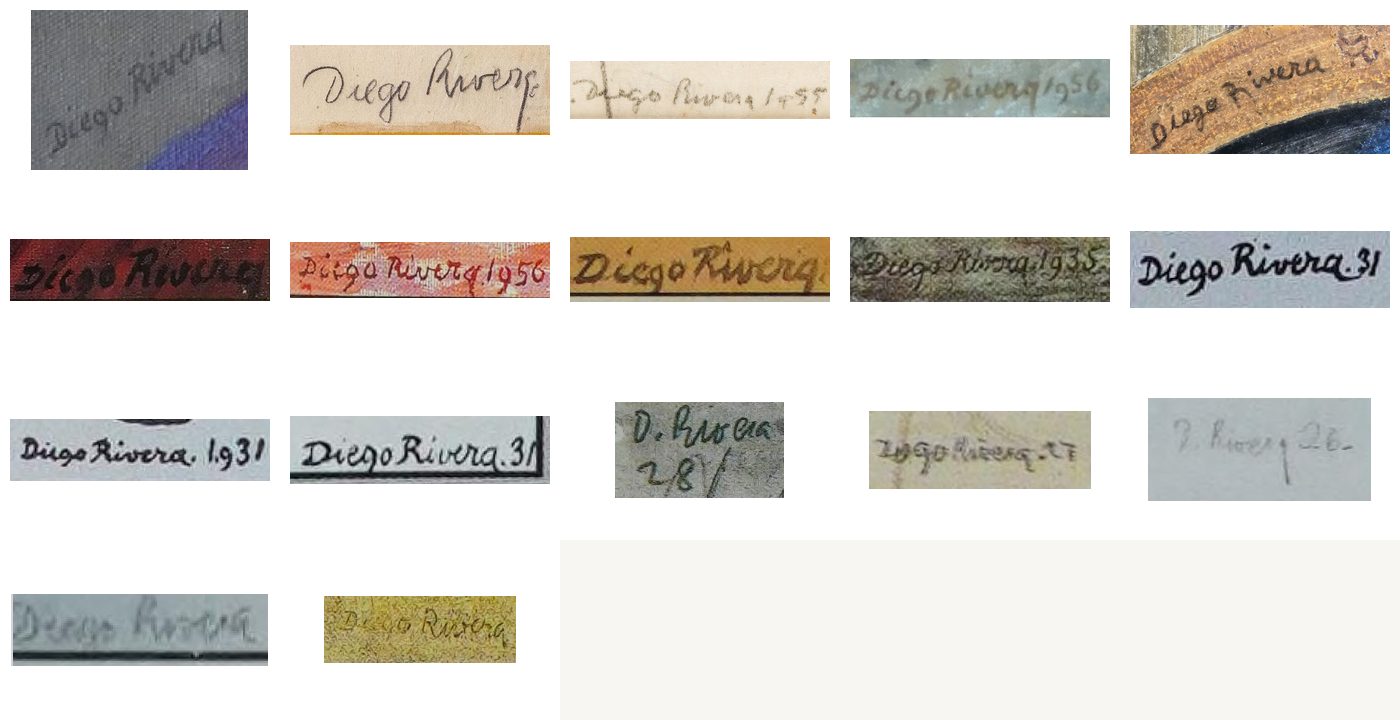
Table presents a selection of original Diego Rivera signatures from documented artworks (labeled s1 through s17 ). These samples are taken from photographs and archives where provenance is well‐established. Notice the relative consistency in letter shaping, spacing, and pen or brush pressure in comparison to the questioned signature in Figure .
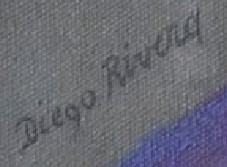
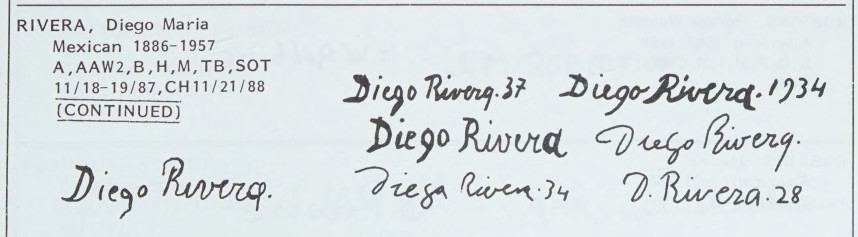
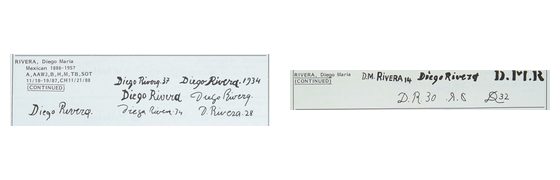
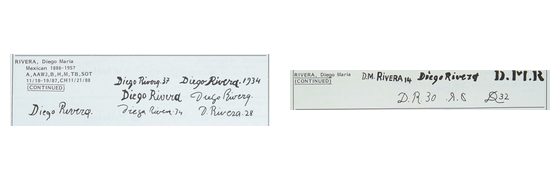
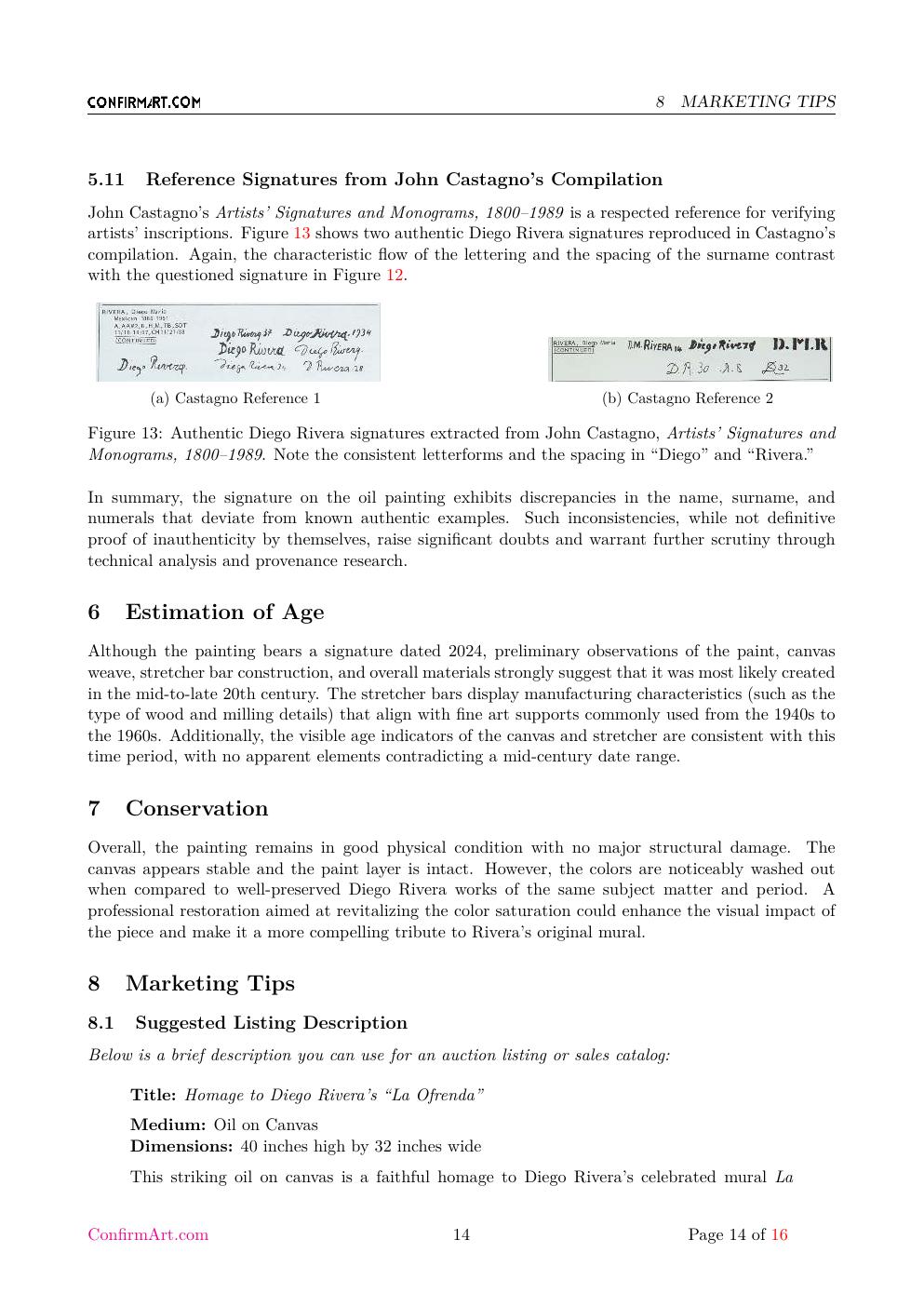
John Castagno's Artists' Signatures and Monograms, 1800--1989 is a respected reference for verifying artists' inscriptions. Figure shows two authentic Diego Rivera signatures reproduced in Castagno's compilation. Again, the characteristic flow of the lettering and the spacing of the surname contrast with the questioned signature in Figure .
Signature evidence
Authentication evidence

Private authentication
Use this real case as a reference for the kind of evidence that can be organized in a private authentication report.
Public report viewer
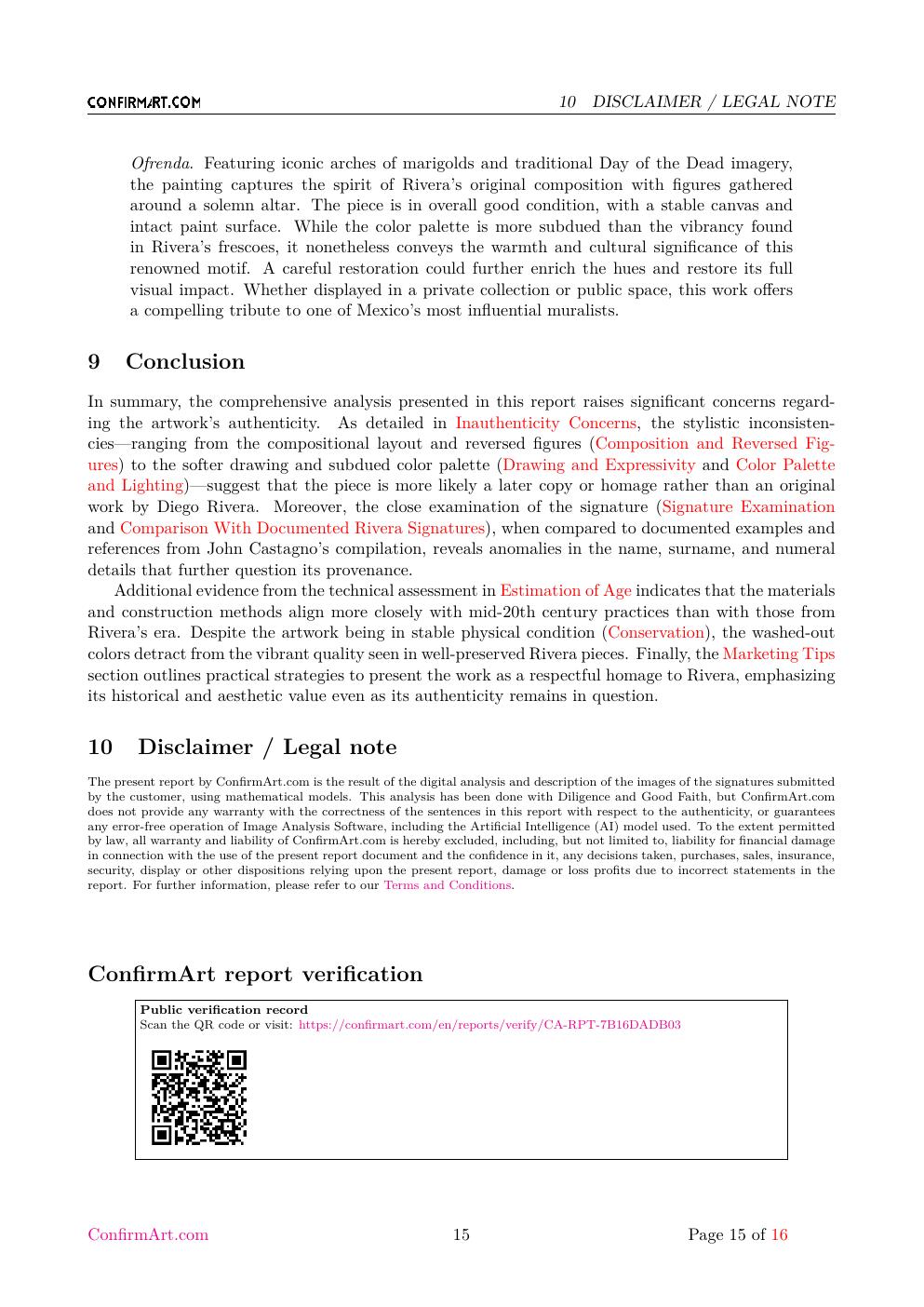
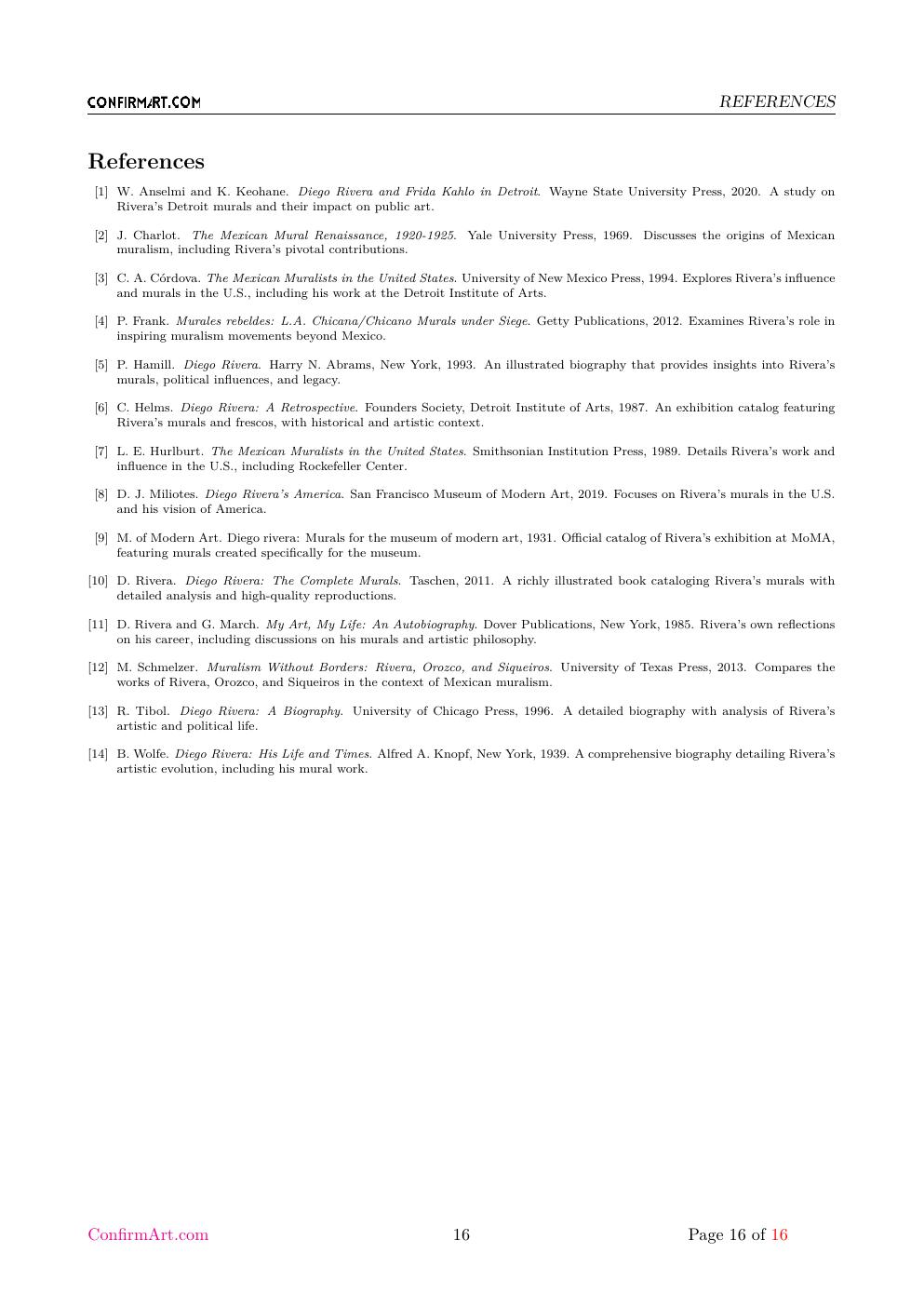
The public browser receives rendered pages, not a native PDF viewer or direct PDF URL. Public pixels can still be screen-captured; private commissioned reports remain controlled client deliverables.
QR verification
This real case has a stable verification URL and source fingerprints. The QR code resolves to the public verification record for this case.
Verify report
Continue reading
Start a private case
Only your email and service selection are needed to submit the request. Optional images, dimensions and notes can be added now or later.
Payment is requested only for the Authentication report. Catalogue search, advisory, restoration and local inspection requests are reviewed first so the scope can be confirmed.
Authentication is a human expert review. ConfirmArt may use AI for bounded research support such as database, image, book or provenance searches, but not as a classifier verdict.